05 Oct

COMMENTARY: I WONDER, WHO IS MY NEIGHBOR?

By Logan Earles

The expert in the law replied, “The one who had mercy on him.” Jesus told him, “Go and do likewise.” (Luke 10:37)

That’s the question I had when I was growing up. Across the street, a new family moved in, and they had a son my age. I was super excited to have a potential new friend. A few days went by, and I built up the courage to go and talk to him. 

This guy was awesome! He was my age and enjoyed the same things I did. It was the best. A year went by, and he and his family moved. I was devastated. A new family quickly moved in, and I began to wonder once again, “Who is my neighbor?” 

It’s an interesting question that was asked of Jesus. When an expert of the law asked Jesus, He had an interesting story to tell. Have you thought about who your neighbor is? Maybe through some curiosity and intelligent questions, together we can see the world the way God intended. Want to know what I mean? Let’s see what Jesus says in Luke chapter 10.

Love the Lord your God with all your heart and with all your soul and with all your strength and with all your mind; and, Love your neighbor as yourself. (Luke 10:27)

When Jesus was asked about the law by a supposed expert of the law, he was trying to catch Jesus making a mistake. So he asks Jesus, “What must I do to inherit eternal life?” Jesus, knowing the man who is asking the questions, asks him to interpret the law. 

The man, feeling confident, sums it up simply by saying, “Love the Lord your God with all your heart and with all your soul and with all your strength and with all your mind”; and, “Love your neighbor as yourself.” To be fair, that’s a really nice and effective way to sum up the law. If we all took this to heart and followed it, I think many of our current societal and relational problems would start to go away.

“You have answered correctly,” Jesus replied. “Do this and you will live.” (Luke 10:28)

The man was not satisfied by Jesus simply agreeing with him. 

He wanted to prod further. So he asks a question that is very revealing of the human condition. He asks, “Who is my neighbor?” If I were to ask you this today, how would you respond? Most likely, it would be some kind of answer about the people who live next to you. However, that’s not what Jesus would say. You see, for Jesus, the question doesn’t involve geographical location. It involves a simple idea that he communicates through a parable.

In reply, Jesus said: “A man was going down from Jerusalem to Jericho, when he was attacked by robbers.” (Luke 10:30)

The story isn’t a very happy one. Jesus describes a man who is robbed and beaten and left for dead. 

As he lays there, different individuals pass by. First is a priest who worships God; he doesn’t help. Next, a Levite whose house is in service to God; he doesn’t help. Last comes a Samaritan, who bandages the man, takes him to an inn, and pays for all the expenses. 

If you aren’t familiar with the social issues of Jesus’ time, you wouldn’t think twice. However, for the man who asked the question, the Samaritan is one of the worst possible people to come by.

“Which of these three do you think was a neighbor to the man who fell into the hands of robbers?” (Luke 10:36)

Jesus finished his story and asked the man which one of the three was a neighbor to the man who was dying. This question is not the same as the previous one I asked you. It’s different. For Jesus, being a neighbor to someone isn’t about where you live; it’s about the way you treat others. Jesus was trying to teach this man that the limits to loving others do not stop with a geographic fence but extend to all peoples.

The expert in the law replied, “The one who had mercy on him.” Jesus told him, “Go and do likewise.” (Luke 10:37)

“Go and do likewise.” These are the words that Jesus tells this expert of the law. When it comes to our walks with Christ, he is seeking for us to be neighbors to everyone. To show mercy and extend love. The good Samaritan in the story didn’t have to help out. He could have walked away, and nobody of his time would think twice. Instead, he went above and beyond what was asked. 

Today, we are faced with similar divisions in society. People who should be our enemies, according to society, but Jesus says otherwise. Jesus, as He left the earth, gave a Great Commission. It’s recorded in Matthew chapter 28. Go and check it out sometime. In it, He says that we are to “go.” This “go” is a command, and I believe that Jesus wants us to go out into the world, treating everyone as our neighbor.

—Logan Earles is the associate pastor at the Littleton Seventh-day Adventist Church. Photo by Zubair Works of Unsplash.

05 Oct

TEAMS THAT THRIVE: 3 PRACTICES TO MAKE TEAMS STRONGER

By Sophia Sotilleo

There’s a shift that happens in leadership. You are responsible for the project but you’re no longer dealing with all of the details.

“We are sharing the vision, influencing and then asking the team to help us execute,” says Sophia Sotilleo, vice provost and dean of the Albin O. Kuhn Library and Gallery at University of Maryland, Baltimore County, and a church member in the Allegheny East Conference. Whether you are building a team or supporting one already at work, Sotilleo offers lessons she’s learned about fostering a positive dynamic.

1. Build the Team Together

“As I build the team, I get the team’s input,” she says, because they are the ones who have to work together.

All the members consider the team’s strengths and its missing pieces. “A team doesn’t thrive on uniformity,” she says. “We don’t need all introverts. We don’t need all extroverts or leaders or followers. We need a variety of perspectives to be balanced.”

Her team reviews applicants and gives recommendations because she wants them to see hiring as something they are doing together. “I don’t want it to be where they say,’ you brought this person.’ I love to say we brought this person in.”

2. Know your People and Support Them

Support also begins as soon as someone joins the team.

“The minute they walk in, they have got to know they are supported and feel like part of the family,” Sotilleo says. When people feel that support, “they will run, they will soar and strive to be amazing.”

The support is not only for new team members. She pays attention to how people engage, what gives them energy, what brings them down, and even what happens to their facial expressions and body language during meetings. One of her practices is a simple check-in at the beginning of meetings.

“How are you feeling today? Can you share two words that describe how you’re doing today?” She writes down their responses and pays attention throughout the meeting. If someone needs to pause or step away, she wants them to feel empowered to do so.

“I want them to know that I see them,” she says, “and that I really appreciate and value where they are and how they are feeling.”

3. Recognize Not Everyone is Right for the Team

Everyone on a team may not see the vision. She offers opportunities for the person to articulate the disconnect.

“If you don’t see it, tell me why,” Sotilleo asks of her team members. Then she tailors a plan for the person to receive additional support to catch the vision. “Lots of conversations, lots of next steps, lots of process building, lots of scaffolding [providing temporary tools, extended guidance, mentoring, etc.] ”

She believes in giving people time to align with the plan. However, “if you still don’t see it, there’s a possibility that this is not the best space for you. And that’s okay,” Sotilleo says. “I’m here to help you find that better fit. When they see that you are authentically invested in their success, they’re more likely to give their best. And if it’s still not a match, they often realize it on their own and decide to make a change.”

Bonus: Pray

Above all, Sotilleo prays for her team members. She knows the blend of personalities, cultures, human nature and life outside of work play a big role in the delicate balance. She also keeps a Bible text in sight on her computer:

Rejoice in the Lord always: and again I say, Rejoice. (Philippians 4:4)

It’s her reminder: “Leadership roles often feel like a constant stream of demands. But by ‘rejoicing in all things’, I stay anchored to who is truly in control. I work for Him, and my goals is for His character to shine through everything I do.”

—Sophia Sotilleo is vice provost and dean of the Albin O. Kuhn Library and Gallery at University of Maryland, Baltimore County, and a member in the Allegheny East Conference. Republished from the September 16, 2026, Adventist Women Leaders email newsletter. Photo by LinkedIn Sales Solutions of Unsplash.

01 Oct

MILE HIGH ACADEMY WELCOMES GENERATIONS BACK TO CAMPUS FOR REUNION WEEKEND

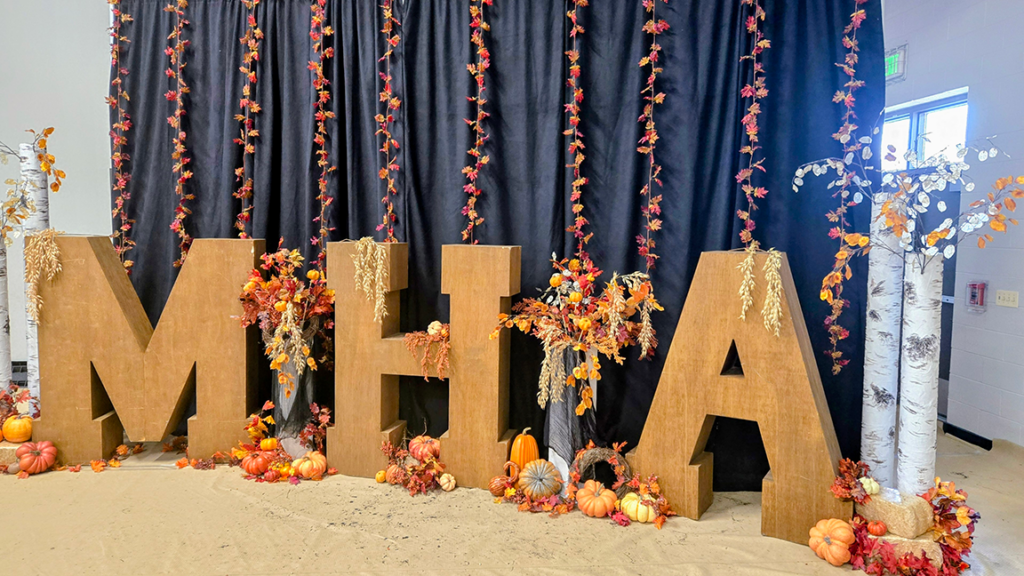
Karrie Meyers – Highlands Ranch, Colorado … Mile High Academy (MHA) in Highlands Ranch, Colorado, brought together past and present families over the weekend of September 25–27 for its annual Alumni Reunion.

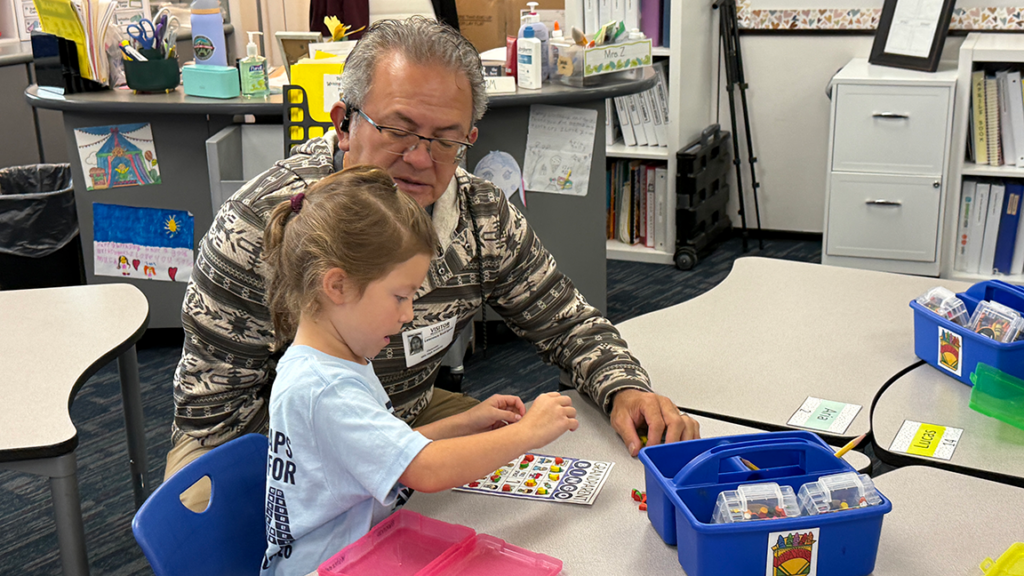
The festivities kicked off on Friday, September 25, with Grandparents Day. Grandparents joined students in the classroom before attending a dedicated chapel service. This year, the school tied its annual Walk-a-Thon into the morning schedule, with students and grandparents walking together to raise tuition assistance funds so every student can attend MHA.

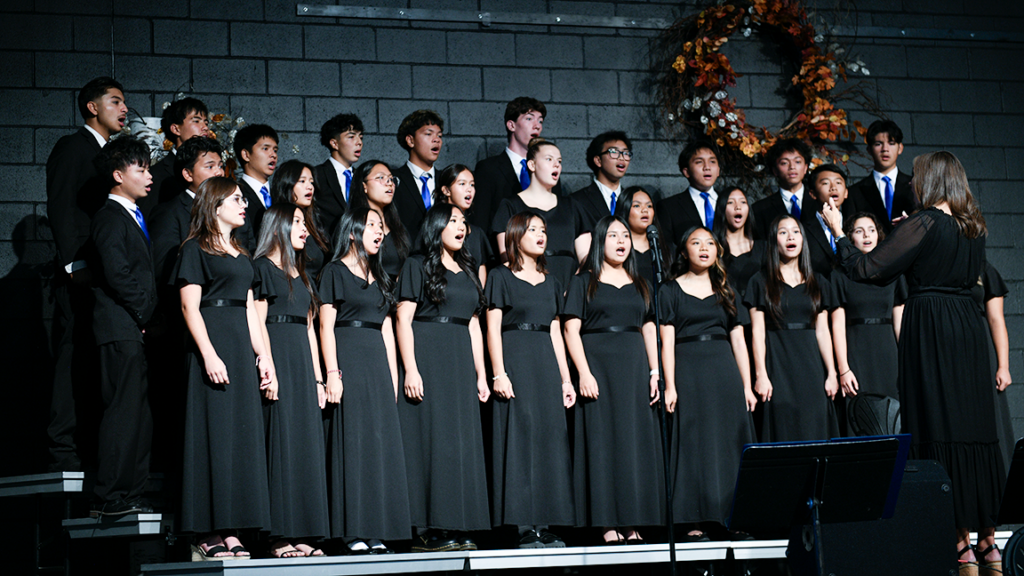
On Saturday, September 26, Alumni Sabbath brought former students back to campus for a morning worship service, with special recognition given to this year’s honor classes ending in ‘1’ and ‘6’. Members of these milestone classes participated in the roll call, prayer, and offering. Phil White, alumni of the Class of 1976 and pastor, delivered a sermon focused on the message to “hold fast until I come.” Afterward, attendees gathered for an enchilada lunch to reconnect with old friends.

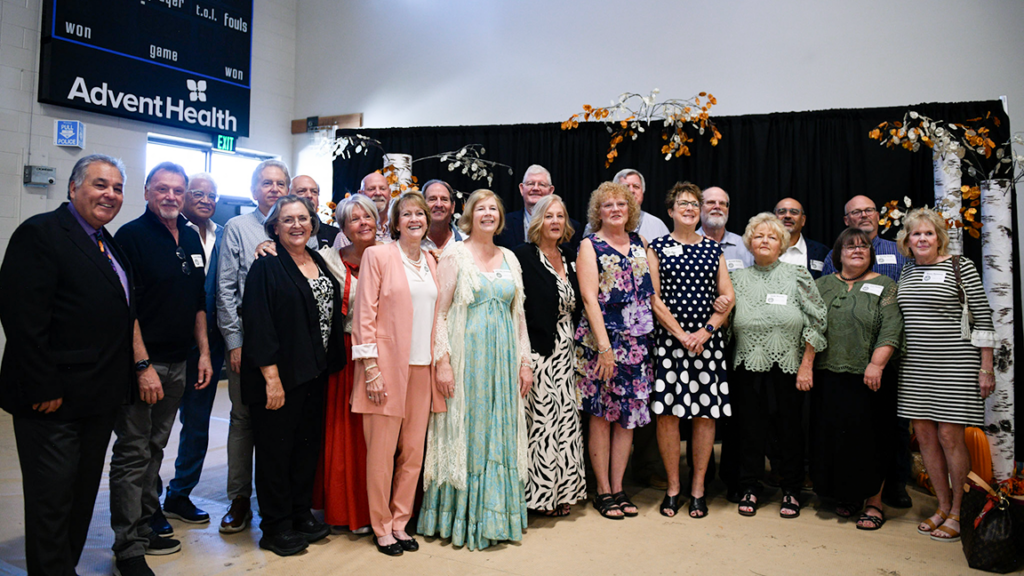
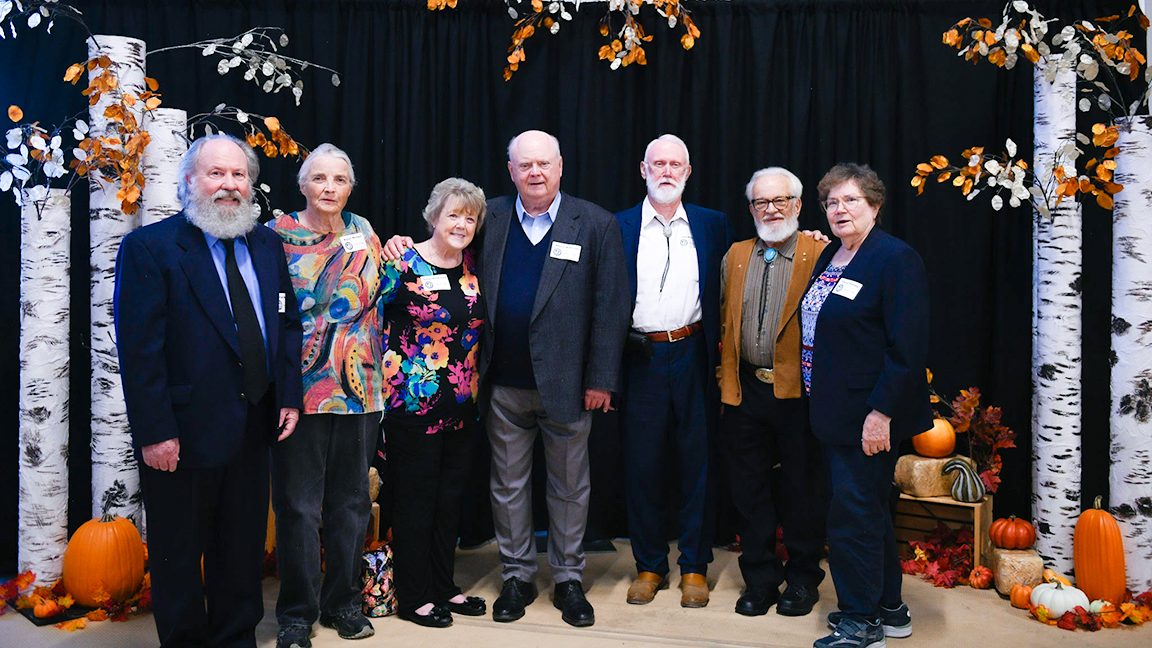
Turnout was strong among the honor classes. All eight living members of the 13-graduate Class of 1966 returned to campus to celebrate their 60-year milestone.

“It was wonderful to see every one of our surviving classmates this weekend,” said Cheryl Horsley, alumni of the Class of 1966. “We reminisced and caught up on what has been happening in our lives. Attending Mile High Academy during our formative years played a role in our learning to deal with life’s challenges and helped us recognize and appreciate the blessings in our lives.”

The Class of 1976 also turned out in large numbers, holding a Friday evening gathering at a classmate’s home and dinner at Maggiano’s on Saturday night alongside the official campus schedule.

“Even though the weekend took place in the new building, it still felt like home—the same welcoming, inclusive atmosphere that defined Mile High Academy for all of us,” added Jake Trujillo, president of the Class of 1976. “Seeing the faculty, the students, the music, and the worship reminded me again that what was poured into us decades ago is still being poured into the next generation. That continuity is something truly special.”

Saturday night brought energy to the gymnasium as MHA hosted its annual Alumni & Friends 3-on-3 Basketball Tournament, drawing players and spectators for an evening of friendly competition.

The weekend concluded on Sunday, September 27, at Raccoon Creek Golf Course, where 62 golfers played in the Mustang Classic Golf Tournament, all giving each other a hard time for missed putts and the toughness of the course.

“Seeing our campus filled with familiar faces across so many generations highlights what our Alumni Reunion Weekend is all about,” said RD Gallant, principal of Mile High Academy. “Whether our alumni graduated last year, six years ago or sixty years ago, this reunion serves as a powerful reminder that at MHA, we are forever connected and always family.”

—Karrie Meyers is the Mile High Academy marketing and development coordinator. Photos supplied.

01 Oct

DISCUSSION STARTERS FOR TALKING TO YOUNG PEOPLE IN THE CHURCH (AND BEYOND)

By Brandon Westgate

While every person is unique, there are some common questions that young people have that many times they never get an opportunity to ask. Creating some intentional conversations where they can be genuine and you can simply guide the conversation can be extremely beneficial for them in being able to process what they are thinking and can aid in you developing a more personal relationship with them.

These three questions are not anything new, but it is a good reminder for us to remember to include these topics in our worship thoughts. As you guide young people through these topics leave a lot of space for “chasing rabbits” and “dead-end comments.” You don’t need to give them the answer, just guide them to it so they arrive at it on their own.

Before we jump in, here are a couple of ice breaker discussion starters:

  • Teens trust influencers more than they trust institutions. Ask them if they feel this way and how they feel about the church. Be prepared to listen and not defend!
  • Fewer than one third of Americans rate pastors as highly honest and ethical. What do you think about that?

Here are those promised three questions.

Question 1: Who am I?

It’s a big question, and young people are constantly bombarded with social media influencers and YouTube algorithms while they are trying to navigate school, relationships both online and IRL (in real life), questions about faith, extra-curricular activities, chores, etc.

During all of this, they are trying to discover who they are. If we don’t give them guidance they can be led to believe that they are something they are not. The Bible is plain that we are all children of God first and foremost. This is our actual identity. The enemy is always trying to make us believe things about us that are not true.

Simply put, we are not what we do, we are who God declares us to be.

If a young person takes something that is not theirs, they may think of themselves as a thief. And you may as well! The enemy will also remind them at every opportunity that that is who they are. It is not who they are! They are a child of God! We are not simply a sum total of what we do. We are who God declares us to be! They need to know that they are unconditionally loved by their Creator in spite of poor decisions that they may have made or will make.

You will likely find the enemy has made a lot of inroads here and it may take a bit for this to land with them. We have our work cut out for us!

Question 2: Where do I fit in?

Young people are trying to find where they fit in, and the goalposts are always moving!

Where do I fit in school, at home, at church? Young people are wrestling with how to fit in. Maybe you remember that struggle as well. Help remind them that they are part of something bigger than themselves, a community of believers who are called to love their neighbor well.

This is always a challenging conversation and usually requires a lot of listening on your part. Let them share how they are navigating fitting in.

Remind them they are part of a family of family of believers and that this is not their forever home.

CS Lewis wrote, “If I find in myself desires which nothing in this world can satisfy, the only logical explanation is that I was made for another world.”

We are fully accepted by God and there is room for us in the kingdom, even when we have trouble finding our place from time to time here in the present.

Question 3: What is my purpose?

They may have many different ideas of what their ultimate purpose is. Let them share.

Firstly, knowing God, then serving God and others is the meta narrative. What that looks like from day to day can be very different.

Sometimes it easy to get bogged down and overwhelmed by focusing on the temporal, rather than looking at things through the lens of eternity. Purpose brings meaning and intentionality to what we do. Without purpose we can feel like a hamster on a wheel. This conversation can be very helpful for young people to talk through. I know many adults who still struggle with their purpose, so this conversation can easily extend beyond generational lines.

I hope this is helpful as you continue to engage the young people in your midst! Thank you are all you do to share the love of God with these precious ones. You are making a difference!

—Brandon Westgate is the Rocky Mountain Conference Youth director. Photo by Meredith Spencer of Unsplash.