17 Mar

REFLECTION: DISCOVERING FAITH FOR YOURSELF

By Leandro Bizama

Recently in my Bible class, one of the students sincerely exclaimed that if he had been Thomas, he would have also not believed that Jesus had resurrected after He had appeared to the women who had seen him first and the other 10 disciples.

“How does God expect me to believe if I did not see or touch him?” he asked.

Good point, right?

I said that the answer is in Jesus’ response to Thomas: He did not shun him or excommunicated him from the community of disciples because Thomas refused to believe. No. But Jesus did have an important lesson for him. He understood that the story of redemption is so incredible that humanity would need some kind of evidence. And so, tenderly but clearly, Jesus gave Thomas evidence of the reality of His eternal life and resurrection (see John 20:25-29). Thomas was humbled and believed.

But Jesus went further and said that those who were not there and yet choose to believe the evidence given to them through the years were specially blessed. Did you catch that?

That blessing of Jesus is for you and me. God has given us ample evidence through the testimony of the Bible and His creation. He guides us every day and gives us all the things we need. He allows history to support the claims He had already given long ago. He brings about supernatural circumstances when and how He deems best.

But He never takes away the possibility not to believe. That is why it is important that our children and young people see the evidence for themselves and come to their own conclusion about who Jesus is and whether He can be trusted or not. We should not shy away from their questions and doubts or frown upon them thinking on their own. Instead, we should gently point them to the evidence of God’s existence, His creation, His love, and the incredible story of Redemption.

In the end, we too have a choice to make. Whether we are like Thomas or not, let us not take for granted whatever evidence God gives us that this incredible story of love we know as the Great Controversy is all true. And through that process of discovery, may all our children be able to say, “My Savior and My God!”

—Leandro Bizama is the associate pastor of Worship and Evangelism at the Campion Seventh-day Adventist Church. Photo by Rosie Steggles of Unsplash.

17 Mar

CAMPION ACADEMY BASKETBALL TEAMS REACH STATE PLAYOFFS IN HISTORIC SEASON

Jill Harlow – Loveland, Colorado … This year marked a historic milestone for athletics at Campion Academy (CA) in Loveland, Colorado, as both the boys’ and girls’ basketball teams competed in the Colorado 2A state playoffs for the first time in school history.

The boys’ team advanced to the regional championship after defeating Dayspring Christian Academy in Greeley, Colorado. in the first round before falling to Heritage Christian Academy of Fort Collins, Colorado. The girls’ team also qualified for the tournament but lost in the opening round to Heritage Christian.

While Campion Academy has been a member of the Colorado High School Activities Association (CHSAA) since 1997 and has frequently qualified for postseason play, the school had historically declined to participate in state tournaments because tournament games were generally scheduled during Sabbath hours.

In the early 2000s, however, CHSAA began making accommodations for schools and students who observe the Sabbath, including Jewish and Seventh-day Adventist participants. These accommodations allow schedules to be adjusted when possible so that teams can compete without conflicting with their religious beliefs.

Even with those accommodations available, Campion had not yet taken part in state tournaments. In 2008, after the boys’ basketball team won four consecutive Northern Front Range League titles, then–athletic director Troy Beans requested permission for the team to advance to the state tournament. At the time, the school board voted against the proposal, choosing instead to prioritize academics and limit the extension of the athletic season.

The conversation resurfaced again in 2025 when the boys’ basketball team once more qualified for state play. That year, the school board approved participation in state tournaments as long as games could be scheduled outside Sabbath hours and did not conflict with major school religious activities. However, the opportunity was ultimately declined due to a scheduling conflict with Campion’s annual spring break mission trip.

The boys’ soccer team became the first Campion team to take advantage of the policy change in the fall season, competing in the state tournament and making school history, even though they only went to the first round.

This winter, the boys’ basketball team built on that milestone. After winning their opening-round game, the Cougars advanced to the regional championship and finished the season with a 14–5 record, ranking 14th out of 58 teams in Colorado’s 2A division.

Campion principal Kaleb Leeper expressed pride in the teams and the example they set.

“I am proud of our athletic teams not only for the level of competition they demonstrate, but especially for the Christian character they show on the court,” Leeper said. “Their example reflects the strong leadership and dedication of our coaches and athletic director.”

Campion Athletic Director Caleb Jahn emphasized how meaningful it was to see the school finally able to participate while still honoring its beliefs.

“I would like to acknowledge CHSAA and their willingness to accommodate our religious beliefs,” Jahn said. “They have been very receptive to our participation and have ensured that we will not encounter scheduling conflicts.”

Jahn also expressed appreciation for the teams Campion faced during the tournament. “Our playoff opponents have been gracious in accommodating our schedule to allow us to observe the Sabbath,” he said. “This achievement is a collective effort, and I am honored to be a part of Campion Academy during a time when our students have the opportunity to showcase their talents to the wider community.”

CA senior student Izuchi Nwankwo also had a standout season. Nwankwo set a new Campion Academy single-season scoring record with 417 points, surpassing the previous record of 360 set by Brit Sigh in 2001. He averaged 21.9 points, 7.2 rebounds, and 2.6 blocks per game.

With these first state tournament experiences behind them, Campion Academy looks forward to future opportunities to compete at the state level while continuing to uphold its mission and values.

“Athletics are just one part of the broader Campion Academy experience,” Leeper said. “Programs in drama, music, and campus ministries also challenge students to grow in their abilities, develop responsibility and excellence, and build strong Christian character. With so many opportunities, balancing busy schedules can be a challenge, but our shared goal remains the same—to glorify God in all that we do.”

—Jill Harlow is Campion Academy Communication director. Photos supplied.

17 Mar

CAMPION ACADEMY CELEBRATES DIVERSITY AT INTERNATIONAL SABBATH

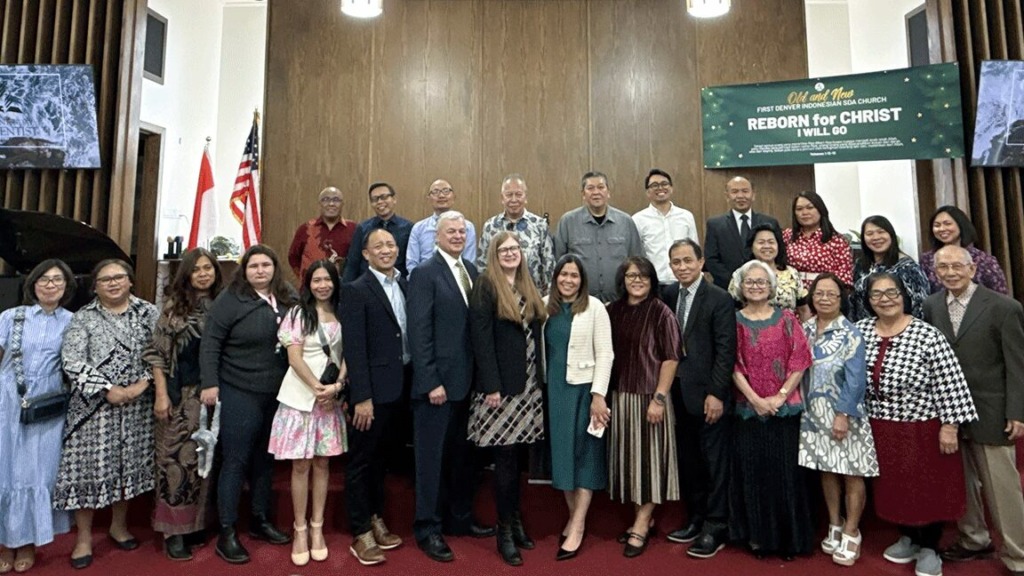
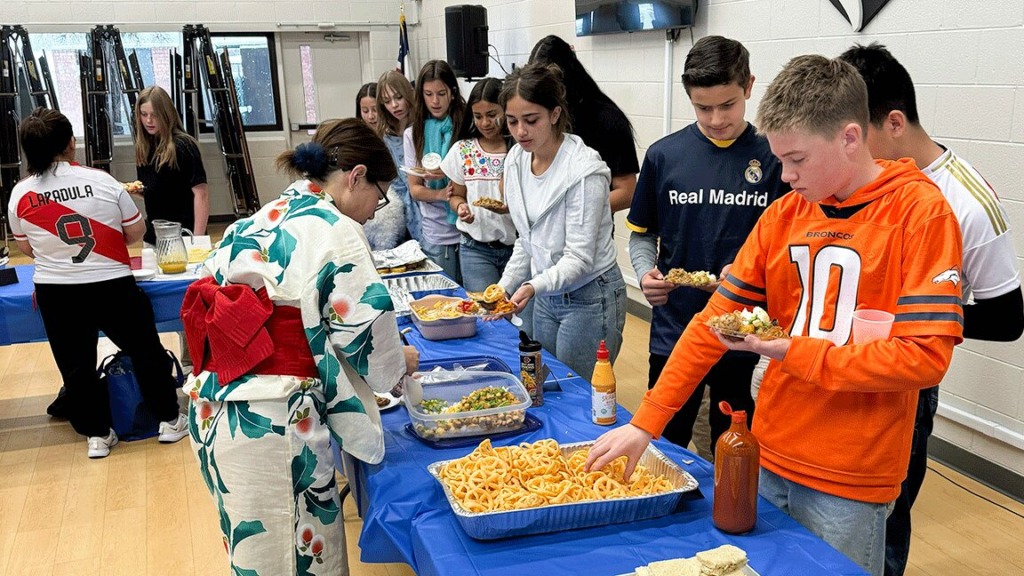
Aome Jacob Angeles – Loveland, Colorado … After much preparation and anticipation, the Campion Seventh-day Adventist Church in Loveland, Colorado, hosted their annual International Sabbath worship service, March 7. The International Sabbath celebration serves to appreciate the cultural diversity within the Campion community and the global Seventh-day Adventist Church by featuring a multicultural and multilingual service.

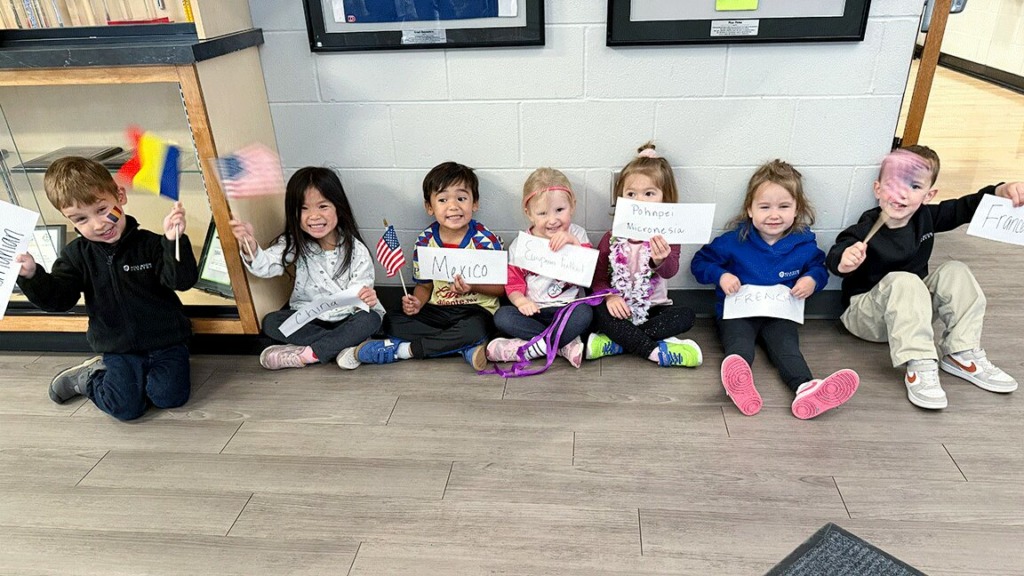
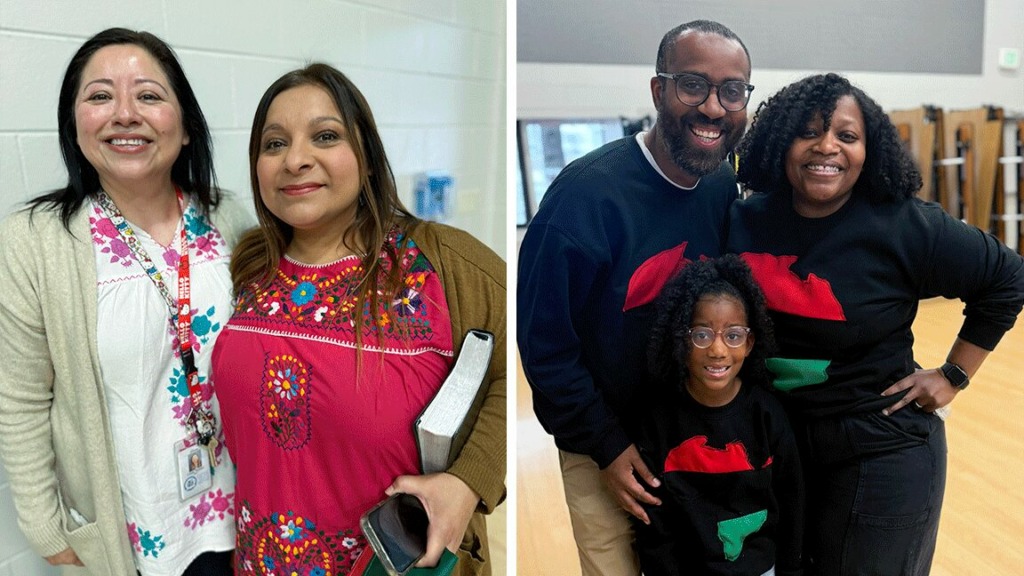
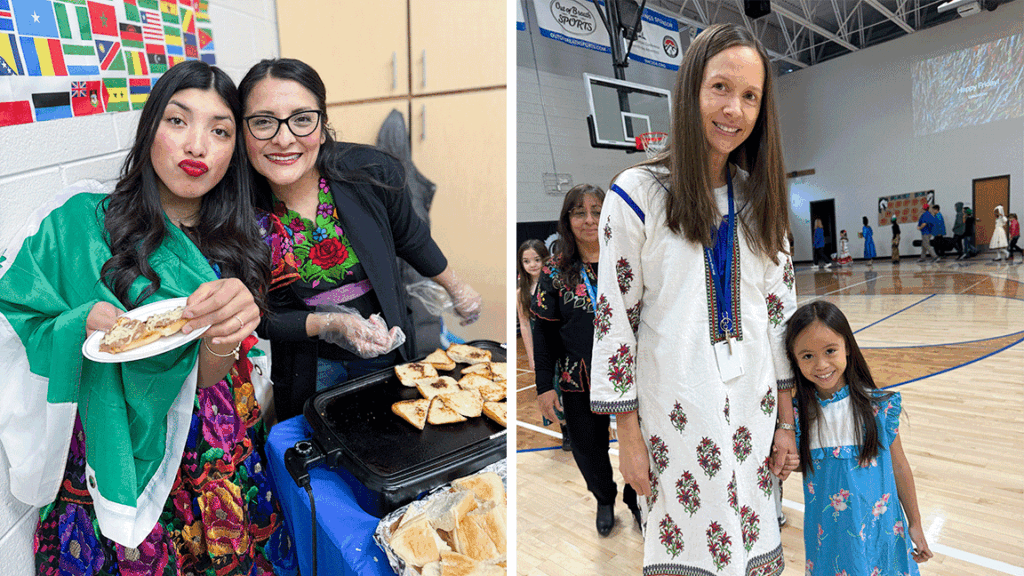
Throughout the program, church members and Campion Academy (CA) students proudly represented their countries by marching in the flag parade, dressing in cultural attire, speaking their native languages, and finally sharing a taste of the world over potluck.

Kicking off the church program, around 50 people carried flags and marched into the church in a colorful and symbolic parade of nations. Flag bearers also greeted the congregation by saying “Happy Sabbath” in 14 different languages represented at the church.

Throughout the service, the praise team members incorporated different languages in their worship songs, presenting the same message in different languages. The theme continued in each aspect of the service with different languages represented in scripture reading, prayer and children’s story.

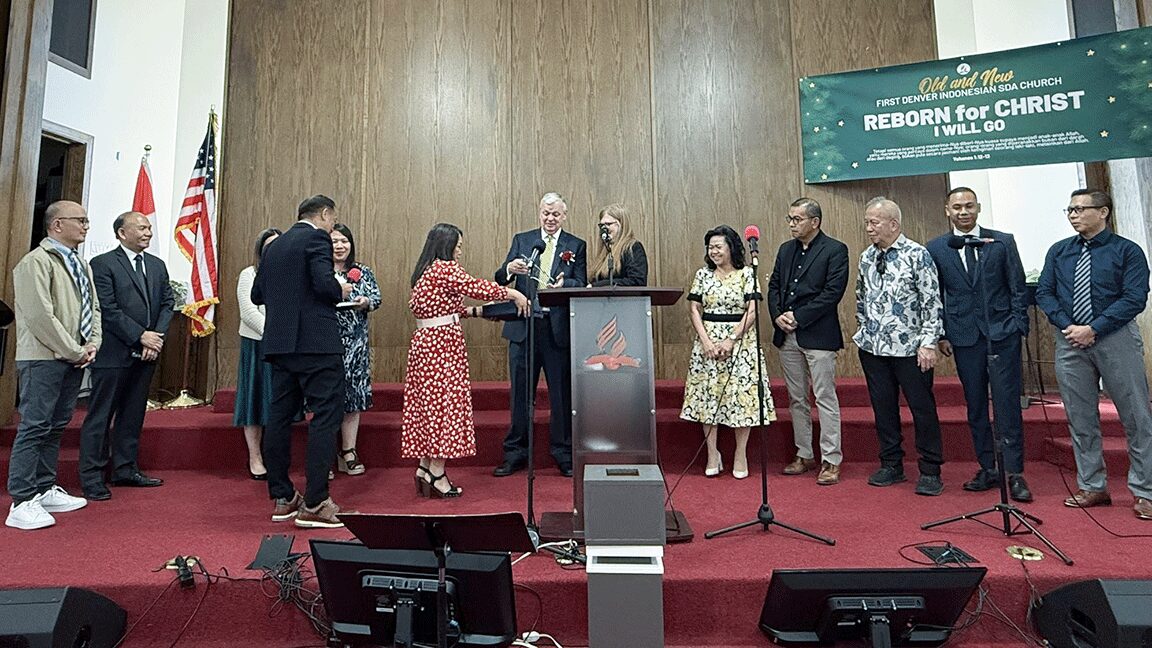
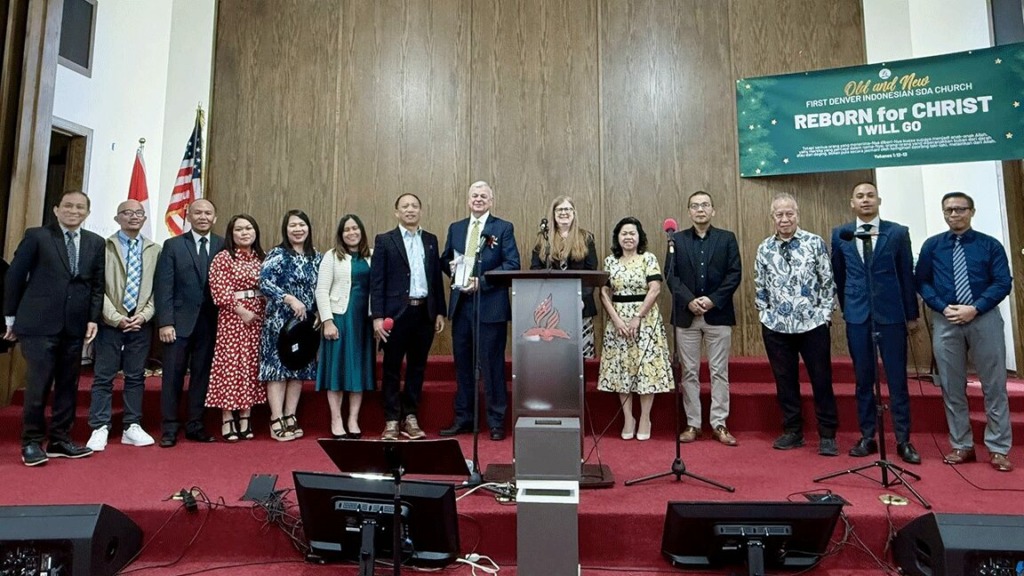
A highlight of the program was the baptism of CA sophomore student Moses W. As a member of an Indonesian Seventh-Day Adventist Church, a group from his church provided special music in the Indonesian language.

Rodlie Ortiz, Campion Church’s lead pastor, gave the sermon appropriately focused on the first Angel’s message in the Book of Revelation chapter 14, which starts by emphasizing the gospel message being preached to all the word in every language.

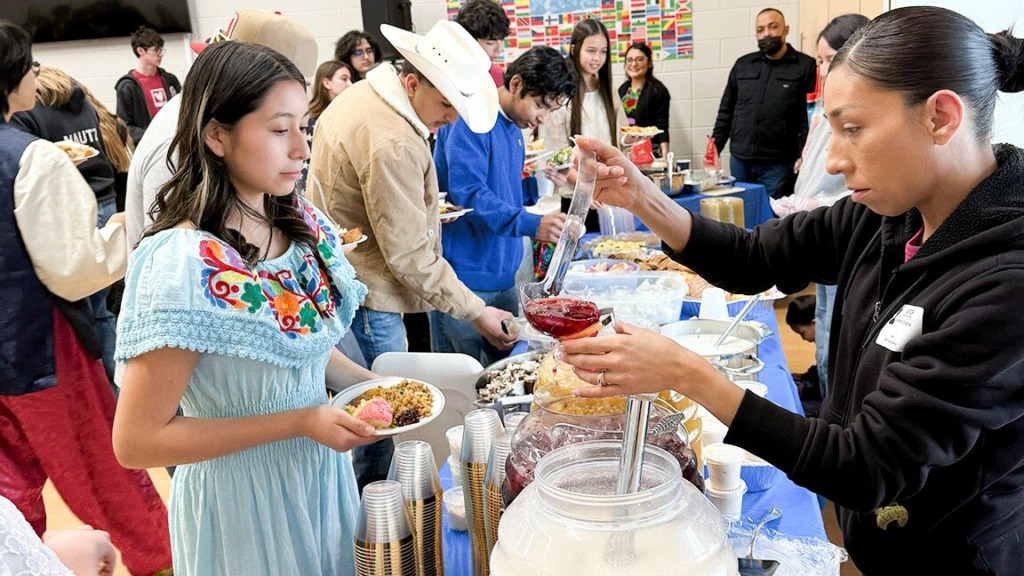
After church, members gathered for an international-themed potluck. Campion Academy students enjoyed Indonesian and South American food, generously provided and served by the Indonesian Church visitors and the Campion Church Spanish-speaking Sabbath School members.

—Aome Jacob Angeles, Campion Academy Student News Team. Photos supplied.

09 Mar

COMMENTARY: WAIT FOR THE PROMISE

By Godfrey Miranda

And being assembled together with them,
He commanded them not to depart from Jerusalem,
but to wait for the Promise of the Father

(Acts 1:4, NKJV)

“I can’t wait!” It’s an expression of enthusiasm and eagerness. When we say it, we’re not admitting a literal inability to wait, but we’re giving voice to the difficulty of being patient until the fulfillment of whatever our expectation might be.

And that’s just it. Waiting isn’t always welcomed.

Like the other night when our family spent what felt like an eternity waiting to exit a parking garage in downtown Denver after a Nuggets game. Waiting can be difficult for a variety of reasons, especially when we feel like we’re waiting on God for a hope to be fulfilled. Our waiting can turn into complaining about unmet expectations, or, worse yet, it can decline into doubt about whether our expectations will ever be met.

The biblical concept of waiting, however, doesn’t have to sap the joy out of life and can actually renew our strength (Isa. 40:31). When the Bible invites us to wait on the Lord, it’s not a passive experience but an active one, actively binding our weakness to God’s strength. How? By sharpening our focus on God’s promises. This is why the resurrected Christ gives specific direction to the disciples’ waiting in Acts 1wait for the Promise of the Father (v. 4). When we focus on God’s promise, our waiting can be a time that grounds and grows our faith.

REHEARSE THE PROMISE

So they worshiped him and returned to Jerusalem with great joy,
and were continually in the temple courts blessing God.

(Luke 24:52-53, NET)

What a precious picture! The disciples, after Jesus’ ascension, were full of faith, hope, and joy. They weren’t despairing over the absence of their Lord but anticipating the Promise of the Father who would clothe them with power from on high (Lk. 24:49). This is why they didn’t return to Jerusalem to hide or mourn as if defeated. No, they went back to worship and praise because the promises of God assured them that they were just getting started.

In the very temple precincts that Jesus just weeks before had been seen as a public enemy in the eyes of the Pharisees, the disciples were unabashedly blessing God. They were giving voice to what He had done and what He promised still to do. When we find ourselves waiting for what we hope God will do in our lives, we don’t have to take a stance of doubtful silence.

No, we can lift our voice to rehearse His promises,
blessing God for the promises He has already fulfilled and
refreshing in our minds the promises He has yet to fulfill.

Listen to Ellen G. White’s description of the disciples upon their return to Jerusalem:

“They knew that they had a Representative in heaven, an Advocate at the throne of God. In solemn awe, they bowed in prayer, repeating the assurance, ‘Whatsoever ye shall ask the Father in My name, He will give it you. Hitherto have ye asked nothing in My name: ask, and ye shall receive, that your joy may be full.’ John 16:2324. Higher and still higher they extended the hand of faith …” (The Acts of the Apostles, 35)

The disciples recalled the words of Jesus and repeated those blessed assurances, and this allowed their faith to reach higher and higher.

There’s a tendency to let spiritual forgetfulness creep in as time passes between promise and fulfillment. Choosing to repeat God’s promises counters that slow fade. Whether this happens in public settings of collective worship or more quiet settings of closet prayer, our waiting becomes reviving when we vocalize God’s praise and rehearse His promises.

APPRECIATE THE PROMISE

But you shall receive power when the Holy Spirit has come upon you;
and you shall be witnesses to Me in Jerusalem, and in all Judea and Samaria,
and to the end of the earth.
(Acts 1:8, NKJV)

We may be waiting for God to fulfill His promises of healing, or wisdom, or whole relationships, or any number of things He has pledged in His Word. But after the ascension of Jesus, the disciples were waiting on a very specific promise—the Holy Spirit’s presence that would empower them be His witnesses to the ends of the earth! When we see the disciples waiting, we’re supposed to see more than their dutiful obedience. We’re also supposed to see their great dependence.

The promise of the Holy Spirit was precious to them
because they were fully aware of their own insufficiency.

The more they felt their need, the more they appreciated “the Promise of the Father.”

The disciples felt their spiritual need and cried to the Lord for the holy unction that was to fit them for the work of soul saving … They realized that the gospel was to be carried to the world, and they claimed the power that Christ had promised. (The Acts of the Apostles, 37)

The magnitude of the disciples’ global mission didn’t paralyze them. No, it prompted them to appreciate God’s promise and claim it in prayer. Jesus had paved the way for this by spending much of His final conversations with the disciples clarifying just how precious a gift the Spirit would be to His followers in the ages to come. Just a quick review of John 14-16 reminds us that the Spirit would …

What a precious promise indeed! For the disciples then and disciples now! We may be waiting for God to fulfill all kinds of promises but let me suggest that the one need of primary importance is our need for the Holy Spirit.

What are you waiting for in this season? We don’t have to let our waiting turn into a time of discouragement or doubt. Instead, we can fix our eyes on God’s promises. May we cultivate habits of rehearsing the promises of God’s Word in a way that revives our hope and expresses itself in genuine worship while we wait. And may we learn to appreciate the promise of God’s Spirit in our lives who brings all other blessings in His train.

PRAYER

Father, I pray for this kind of faith that is fixed on Your promises. Guard my heart from spiritual forgetfulness and bind my heart to the strength found in Your Word. Open my eyes to my need for Your Spirit and let me appreciate just how precious a gift You’ve pledged to us.

—Godfrey Miranda is lead pastor at Littleton Seventh-day Adventist Church. Photo by Michael Pointner of Unsplash.

09 Mar

TESTIMONIO DE ESTUDIANTE: HANNA

Yo escogí Mile High Academy, porque desde la primera vez que llegue acá a USA quería estudiar aquí. Me dijeron que debía primero ir a un colegio público a mejorar mi Ingles y después regresar. Pase un año en otro colegio y cuando por fin me pusieron en este colegio la verdad note una gran diferencia. Conocí muchas personas muy amables (Una de ellas que siempre me saludaba fue Emalee), he hecho muchos amigos (Como, Roger, Yana, Chelsea, Alondra, Grace, Tina, Quincy & Leslie).

Escogí MHA también porque allá en Perú yo estudiaba en un colegio adventista que se llamaba “Colegio Union”. Para ser sincera, se que este colegio es más pequeño del que tenía allá, pero me hizo acordar mucho a mi colegio de Peru.

MHA me a ayudado mucho con el Ingles ya que mi idioma materno es el español. He aprendido muchas nuevas palabras. Sigo teniendo el miedo de poder hablarlo, pero se que poco a poco puedo ir mejorando en el idioma. Me esta tomando tiempo, pero espero que para mí ‘Senior year’ pueda hablar un Inglés más fluido.

MHA me ha ayudado con mis estudios demasiado. Aprendí los países de casi todo el mundo en la clase de historia de Mrs. Berg, también como los estados de estados unidos y sus capitales. En matemática, Mrs. Fattic siempre me ayudaba en algunos problemas que eran difíciles para mí.

MHA también me ayuda a poder acercarme mas a Dios, ya que debo hacer ayudas comunitarias y así puedo ayudar a mi iglesia, dirigiendo cantos y ayudando a los chicos que aun no saben de Dios tan bien a conocerlo mejor.

En fin, MHA es un buen lugar para poder estudiar. Y, aunque cansa, me encanta estudiar aquí y mil veces escogiera este colegio.

—Hanna es estudiante de penúltimo año en Mile High Academy. Reproducido con permiso de “The MHA Mustang News”, boletín informativo por correo electrónico del 5 de marzo de 2026. Foto proporcionada.

09 Mar

STUDENT TESTIMONIAL: HANNA

I chose Mile High Academy (MHA) because, from the very first time I came to the USA, I wanted to study here. However, I was told that I first had to attend a public school to improve my English and then come back. I spent one year at another school, and, when I was finally enrolled here, I honestly noticed a big difference. I met many very kind people—one of them who always greeted me was Emalee—and I made many friends.

I also chose MHA because I studied at a Seventh-day Adventist school back in Peru called “Colegio Unión.” To be honest, I know this school is smaller than the one I had back home, but it reminded me so much of my school in Peru.

Mile High has helped me a lot with learning English, since my first language is Spanish. I have learned many new words. I still feel afraid to speak it sometimes, but I know that little by little I will improve. For me, it is taking time, but I hope that by my senior year I will be able to speak English more fluently.

MHA has also helped me greatly with my studies. In Mrs. Berg’s history class, I learned the countries of almost the entire world, as well as the states of the United States of America and their capitals. In math, Mrs. Fattic always helped me with concepts that were difficult for me.

MHA also helps me grow closer to God, since there is an emphasis on community service. I help my church by leading songs and helping younger kids who do not yet know much about God to learn more about Him.

MHA is a great place to study. Even though it can be tiring, I truly love studying here, and I would choose this school a thousand times again.

—Hanna is a junior student at Mile High Academy. Republished with permission from “The MHA Mustang News” March 5, 2026, email newsletter. Photo supplied.

09 Mar

CAMPION STUDENTS LEARN TO “STEP OUT” AT WEEK OF WORSHIP

Abigail Brown – Loveland, Colorado … Students and staff at Campion Academy (CA) in Loveland, Colorado, came together each morning for a student-led Week of Worship, February 23-27.

The theme for the week was “Stepping Out,” which was based on the story detailed in Matthew 14. In the story, the disciples were on a boat in a storm and Jesus began to walk toward them on the water. Upon seeing Jesus, Peter stepped out of the boat to walk to Him.

Each day was led by a different group. The staff began on Monday followed by the freshmen students on Tuesday, sophomore students on Wednesday, junior students on Thursday, and senior students on Friday. To conclude, the CA Student Association led out the Friday night vespers worship service.

Many students appreciated how each group shared the message. Student Pam expressed, “I liked seeing the different perspectives in each of the messages.”

Sophomore student Daphne stated, “I enjoyed seeing everyone coming together to worship God.”

A lot of people appreciated the music during the week. Alexa, student, shared, “I liked listening to the praise teams and special music from this week.” A particular moment that stood out to a lot of people this past week was when student Natalie sang special music.

Even though the week was busy with schoolwork, sports, and other responsibilities, students still showed up and supported each other. Aspen, student, reflected, “I liked the fact that, despite a busy week, we were all able to pull through in some way.”

The message from this week was inspiring for many, encouraging students to trust God in challenging personal situations just as Peter trusted Jesus enough to step out on the water.

—Abigail Brown, Campion Academy Student News Team. Photos supplied.

05 Mar

DOUG INGLISH TO RETIRE AFTER A DECADE OF SERVICE TO RMC

RMCNews – Denver, Colorado … Doug Inglish, Rocky Mountain Conference (RMC) vice president for Administration, announced at the RMC Executive Committee meeting on February 17 his plans to retire effective June 30.

Inglish joined RMC in 2016 as the director of the RMC Planned Giving and Trust Services department. He stepped into RMC’s administration team as vice president for Administration in April of 2021. In this role, he oversaw official recordkeeping, pastoral recruitment and assignment, policy application, legal matters, and additional duties.

“What I appreciate most about Doug is his practical wisdom, depth of knowledge, and clear understanding of the real-world challenges surrounding the church and its ministry,” remarked Dave VandeVere, RMC president. “These strengths are rooted in his extensive experience as a pastor, Trust Services director, and church administrator, as well as his dedicated work alongside pastors in a variety of ministerial settings. It has been a true joy to work with him over the past six months, and his ministry here at the Rocky Mountain Conference has been an immense blessing to me personally and to our entire organization.”

Born in Indiana, Inglish has a lifetime of service in the Seventh-day Adventist Church which began as a youth summer camp counselor and Boy’s director at Timber Ridge Adventist Camp in Indiana and Camp Au Sable in Michigan. After graduating from Andrews University in Berrien Springs, Michigan, with a major in history and a minor in political science in 1982, he served as Boys’ dean at Ozark Adventist Academy in Gentry, Arkansas.

After taking time off to earn a Master of Arts in Political Science, Inglish returned to Adventist education in New Jersey. He was called to pastoral ministry in 1989, spending the next 25 years in full-time ministry with rural, multi-church districts, multi-pastor metropolitan churches, and churches associated with Adventist institutions, including Sunnydale Academy in Centralia, Missouri, and Minnetonka Academy in Minnetonka, Minnesota. Just prior to joining RMC, Inglish served the Minnesota Conference as the property manager and director of Trust Services, Stewardship, and Personal Ministries.

“It wasn’t the journey I expected or planned, but, ultimately, it was the journey I wanted,” reflected Inglish. “It has been an honor to serve the Lord by supporting the mission of the Church.”

Darin Gotfried, RMC vice president for Finance reflected, “Serving alongside Doug in administration gave me a front row seat to his dedication to the Church. Even when we found ourselves in the middle of tough conversations, I always appreciated that we could find common ground. I will truly miss our collaboration, but I’m so happy for Doug as he heads into this next chapter. I hope that he enjoys every bit of his retirement!”

Inglish’s retirement will open up a vacancy in RMC’s administration team, and we are now accepting candidates for the position. Please contact Dave VandeVere, RMC president, to apply or recommend an individual.

—RMCNews. Photos by Liz Kirkland and Rajmund Dabrowski.

02 Mar

COMMENTARY: WHY WE ARE STILL HERE—ELEVATING THE HEART OF MISSION

Let’s talk about the things we have been reading regarding programs and processes. Those things are all wonderful and necessary. But, if I am going to be honest, I do think we’re not making the progress that heaven has planned for us.

We have preached the same heaven-inspired Gospel in the same way for the last 170 years, and we still have not reached a large portion of the world population who do not know Jesus.

People are busy doing good things, and the devil is plenty pleased if we’re busy doing good things because we lose focus on the ONE thing: JESUS. We need to consider taking this to the next level; busy isn’t enough, and this is why we need to talk about the Holy Spirit.

We know Jesus has told us repeatedly to ask for the Holy Spirit. Now, I’m not saying that those doing this work are devoid of the Holy Spirit because they do have the Holy Spirit. But we don’t have the Holy Spirit power that Jesus wants us to experience. And that comes through the outpouring of the latter rain on the old and young, men and women, as has been prophesized. The Holy Spirit will not be poured out on a mixed multitude. They were all in one place in agreement with the mission: GO (Joel 2:28-29, Acts 2:17-18).

And we cannot deny the reality of the time we are living in. It seems that we are watching in real-time the development of end time events as described in the Book of Revelation. It is aptly described in Revelation Chapter Seven with the four angels holding back the four winds, restraining the devil’s purpose to destroy the earth. The angel is flying swiftly saying don’t let the wind blow, don’t let the devil continue his destruction until the servants of God are sealed in their foreheads.

“The only way in which we can gain a more perfect apprehension of truth is by keeping the heart tender and subdued by the Spirit of Christ … the science of salvation cannot be explained; but it can be known by experience …” (Ellen G. White, Desire of Ages, p. 494.4).

The sealing of the servants of God is accomplished in the final outpouring of the Holy Spirit in the latter rain power (Ephesians 4:30). We have good intentions and have been working really hard, but we need Holy Spirit power:

But you will receive power when the Holy Spirit comes on you; and you will be my witnesses in Jerusalem, and in all Judea and Samaria, and to the ends of the earth (Acts 1:8).

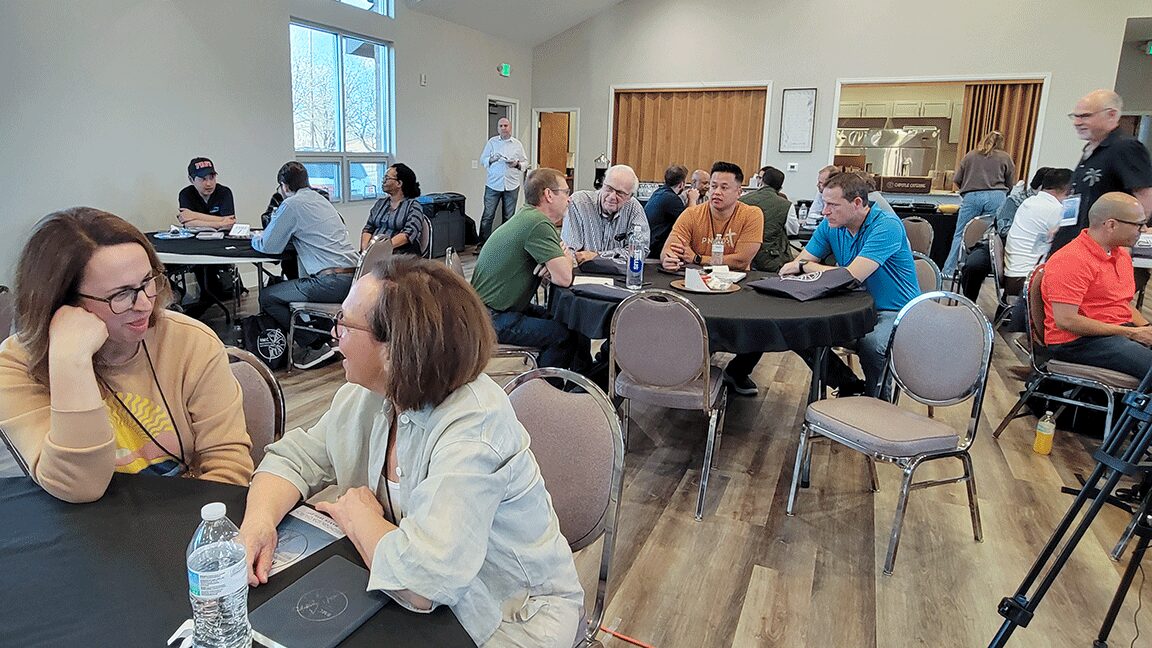
We need to come together and pray and ask for the Holy Spirit. The Holy Spirit is not going to be poured out through us without our asking. It’s not going to just start raining one day. We need to come together in groups and ask. And that is a problem we have because we let too many things separate us. The Holy Spirit brings us into unity. Unity is not conformity. He will change our hearts bringing agreement on the mission and that is “GO.”

“Endowment of Holy Spirit brings unity—but I know that just as soon as the Holy Spirit comes upon hearts, there will be unity in voice and understanding; and wisdom will be given us.” (Ellen G. White. Manuscript 16, 1903. “Unity of Effort.” April 1, 1903.)

I want us to ask Jesus to lift us to His level and let us explore the avenues that have been open for us. We could have been in heaven long ago, so why are we still here on earth?

We are not following the advice that we’ve been given. Ellen G. White says in the devotional Homeward Bound:

“It was not the will of God that Israel should wander forty years in the wilderness; He desired to lead them directly to the land of Canaan and establish them there, a holy, happy people. But ‘they could not enter in because of unbelief.’ (Hebrews 3:19) Because of their backsliding and apostasy, they perished in the desert, and others were raised up to enter the Promised Land. In like manner, it was not the will of God that the coming of Christ should be so long delayed, and His people should remain so many years in this world of sin and sorrow. But unbelief separated them from God. As they refused to do the work which He had appointed them, others were raised up to proclaim the message. In mercy to the world, Jesus delays His coming, that sinners may have an opportunity to hear the warning and find in Him a shelter before the wrath of God shall be poured out.” {HB366.3}
Now IS the time to come together and ask for the Holy Spirit, but many are afraid that the Holy Spirit will make us do something we don’t want to do. We are afraid of the Holy Spirit because we’re not in charge.

Look at how few people we have that are willing to go as missionaries. And then we need to train them. Our academies, colleges, and universities need to be training centers for missionaries. We need people that are willing to say, “Here am I, send me.”

So, where are the missionaries?

In 1904, P.T. Magan received an offer from Dr. John Harvey Kellogg to take charge of stock sales for his Corn Flakes business. That could have made him a millionaire, but he decided to be a missionary instead. Corn Flakes is a good and noble endeavor, but it wasn’t spreading the Gospel. So, he decided instead of making money, he would help people find Jesus. We are privileged being invited to participate.

And God wants to use the talents that He has given to individuals. But, if those whom He gave the talents won’t use them, He will develop others. He is going to equip the willing.

“The Lord can do more in one hour than we can do in a whole lifetime, and when He sees that His people are fully consecrated, let me tell you, a great work will be done in a short time, and the message of truth is to be carried into the dark places of the earth, where it has never been proclaimed.” (E.G. White. Fifth Manuscript Release, “Inspired Thoughts to Move Your Heart,” December 26. p.347.3.)

Recalibrate:

“It is all-essential for the Christian to understand the meaning of the promise of the Holy Spirit just prior to the coming of our Lord Jesus the second time. Talk of it, pray for it, preach concerning it; for the Lord is more willing to give the Holy Spirit than parents are to give good gifts to their children.” (Ellen G. White. The Review and Herald, November 15, 1892.)

If we consider the biblical story of Nehemiah, we see a narrative of resisting opposition to fulfill the call from God, Nehemiah saying, I am doing a great work, and I cannot come down (Nehemiah 6:3).

What distractions are trying to pull you off your wall?

What might you be resisting right now?

When was the last time you asked for the Holy Spirit?

—Ted Williams is the district pastor of Trinidad, Alamosa, and Monte Vista Seventh-day Adventist Churches. Photo by Liz Kirkland via Adobe Firefly.

24 Feb

COMMENTARY: FROM SPECTATORS TO WORSHIPPERS—REDISCOVERING THE HEART OF PRAISE

By Mark Weir

If there is one thing that we can almost be certain will happen in our churches each week, it is this—people will come together for worship. Although, I did encounter a small group of people who only came together when the pastor was there, and their reason for this was simple: why should they bother to come when he didn’t.

In most of our churches, there is a tremendous amount of time and energy that goes into preparing for the worship service each week. And if you live in an area where there are multiple church options, it is very easy to slide into spectator mode—attending the church of your choice simply based on what you like best.

When we lived in the Spokane, Washington, area I regularly heard about what was happening in the Walla Walla area. With almost a dozen “worship” options within a few miles of each other, there was always “something” happening in one of the churches. Also, there were a variety of styles to worship to choose from. The University Church had great music and a wide variety of special guest speakers. The Village Church had dozens of retired pastors and a very traditional service. There was another Church that aimed to be a bit more contemporary. Another church focused on young adults and families. Then there was a church that seemed to fashion itself as the conservative alternative, plus several other smaller churches trying to establish their niche.

Needless to say, on any given Sabbath there were multiple “options” to consider; different “flavors” to sample, different “special events” to enjoy. It was almost like going to a restaurant, looking at a menu and saying, “What sounds good to me today?”

Yet the common denominator was this thing we call WORSHIP.

So, the question that must be asked is this: what is worship supposed to be all about? Is it about my preferences? If that were the case, then … who has the best music, or speaker, or kids programing, or guests, or nicest greeters, or best food, or uses the Bible version that I prefer, or any number of other factors that all are centered on me and what I like best. Yet the question remains, and that is what is worship really all about?

Recently I shared several sermons on this topic with our church family because, while we come into a building, is simply filling a seat all that worship is about?

We began the sermon series by examining the meaning of the word worship, and many will be surprised to discover that the actual word has a very specific meaning: attributing worth and praise to God. When we come together to “worship,” we are gathering to celebrate what GOD HAS DONE, and if we focus on anything else, we are on a very slippery slope. When we understand and embrace the fact that I exist because of what God has done, I have hope and a future because of what God has done. I have gifts and skills and opportunities because of what God has done, and suddenly, my focus begins to shift. So, the music isn’t my favorite. I worship what God has done. So, the speaker isn’t very thought-provoking. I worship what God has done. So, the people weren’t very friendly. I worship what God has done. Because worship is not about me, or them. It is about God, and I want to acknowledge what He has done.

But this is only the beginning, because worship also has a direction, an aim, a target, so to speak. While the word worship has a specific meaning, the purpose of all that we do when we worship should be pointing a certain direction, and that direction is towards God.

I think we would all pay lip service to that concept, but within each of our hearts is where the challenge comes. Let me explain.

What if, when we came together for worship, our only focus was to make everything we did and said centered on making the experience as wonderful for God as it could be? I realize this may sound odd, but if the audience for worship is the Lord, then everything is all about Him. Are we bringing our best? And if we are going to bring our best, it will cost us something. It will cost us time, energy, creativity, attention, plus much more. We have come into His presence, and it is an awesome presence. There is nothing I bring that adds to Who He is, but I still bring my best, as an expression of appreciation.

When our worship puts God back at the center—makes Him the focus—our petty preferences pale. And it is right here where true, powerful, authentic worship happens.

We have all heard the stories—stories of the mighty moving of the Holy Spirit—times when it was obvious to all that something powerful was happening. Wouldn’t it be wonderful if it were more than stories, but our experience?

Most of us are aware of the need for power. Whether it is for our cars, our homes, our phones, without power, we cannot function. So, shouldn’t it be the same when we worship? Shouldn’t there be a power that is palpable and present, that is tangible and transformative? Aren’t we tired of just going through the motions?

The power that is so needed in our worship services is not impossible to discover. It simply takes focus and purpose. This implies that not only should those leading out in worship prepare, but so should every person who attends.

So, how do worshippers prepare to worship?

Whatever we do in life, there is preparation that is necessary. From eating breakfast to getting ready to go to work, preparation happens. So, when it comes to worship, my personal preparation will include things like my attitude—am I coming to give or get; am I going to be a channel of blessing or a recipient; am I coming to receive inspiration or be a source of inspiration for someone else? These are attitudes we bring with us every time we walk through the doors of the church.

Also, am I teachable? Regardless of what is happening, am I looking for something I can learn that will help me serve Jesus better? Am I listening for insights I may not have considered? Am I endeavoring to understand musical expressions that may not be my favorite but seem to speak powerfully to others? And each week, do I spend time in prayer before coming to church praying for the pastor, the people leading out, the person walking through the door for the first time?

For those leading worship, are we thinking about the various ways people learn? Most church services do a lot that is auditory. Many are doing more with the visual aspect using projection elements. Yet is it possible to become so technologically savvy that we miss what the real purpose of worship is—attributing worth and honor to God?

When authentic worship happens, two results should be seen: God’s power is evident and lives are being changed. The best example we have of this is found in the early church in Acts 2:42-47. Here is the record of a worshiping community.

In verse 42 we discover they were a Learning Church—people listened to the teachings of the apostles about Jesus every day.

Also, in verse 42 we find that they were a Fellowship Church—they found value in spending time together.

In addition, we read in verse 42 that they were a Praying Church—that was where they found their strength. They would go before God before they went out into the world. They could meet life’s problems because they had met with God first.

The results of this are also found in verse 42—they were an Awesome Church. Awesome in that they were filled with awe toward God and all that He had done. There was a sense of wonder and expectation. There was a respect for God and for others because they knew that everything they did brought as awareness of their Lord.

In verse 43 we discover that this was a Happening Church. Signs, wonders, miracles, transformation—people expected great things to happen and they did.

From verses 44 and 45 we learn that they were a Sharing Church. It appears that there was an intense feeling of responsibility they had towards one another which led to generous giving so that everyone could prosper.

In verse 46 we find that they were a Worshipping Church—these people never forgot to visit God’s house. It was when they were together that things happened, when God’s Spirit moved in a mighty way. They demonstrated that solitary religion is not the path to follow.

And finally, in verses 46 and 47 we see that they were a Happy Church—joy and gladness is what the people experienced, and others found these believers to be winsome and attractive. There was indeed something unique about those worshippers, and, as a result, the Lord added daily to those being saved (verse 47).

This is the kind of worship we are striving toward!

—Mark Weir is lead pastor of Denver South Seventh-day Adventist Church. Photo by Matthew de Livera of Unsplash.

1 2 3 124