29 Jun

GVR CAMP PAUSED FOR A WEEK DUE TO COVID CONCERNS

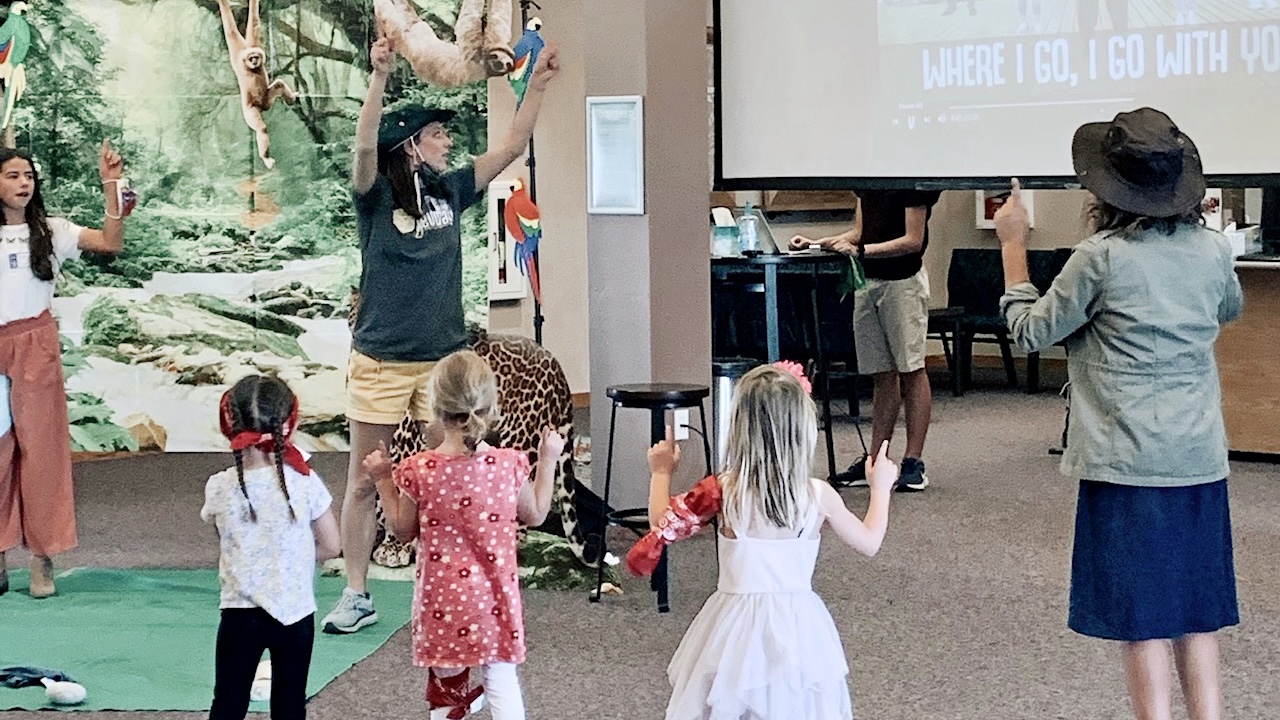
RMCNews with John Boone – Ward, Colorado … Explore campers ended their June 20-25 week at Glacier View Ranch with memories of an abundance of fun.

The camp staff hosted 75 Explore campers (ages 8-10) and will long remember providing a ministry to one of the campers for which GVR is known. Ashley Halvorson, girls’ counselor and Arts & Crafts director, enthused, “I taught one of my campers how to pray for the first time.”

But not all news is positive.

Late on Saturday, June 26, camp organizers received a report that an Explore camper had tested positive for COVID-19 after arriving home.

“Our hearts ache for the affected camper and their family. You are in our prayers,” said John Boone, GVR’s camp PR and marketing intern. Following the report, the COVID-19 Protocol Action Plan from Boulder County Public Health was enacted. It put several staff members on a seven-day quarantine.

The impact the quarantined staff would have on the program was reviewed and after taking into consideration the poor weather forecast for the following week, with temperatures in the 40s and 50s coupled with rain every day, the staff decided, according to Boone, that “it was in the best interest of our campers to cancel Adventure week for ages 10-12. Unfortunately, the GVR facility is not equipped to facilitate a “best summer ever” experience indoors while also upholding the COVID policy.

Parents were notified of the cancellation of Adventure Camp early Sunday morning. “Thank you for all the thoughtful decisions you have made,” said one parent. Rachel New, mother of one of the disappointed campers commented, “Prayers for the exposed, sick, fearful, and all the children who miss out on camp this summer.”

The organizers are grateful to camper families for understanding the difficulty of this decision and to our staff for taking it in stride. Ignite camp for ages 12-14, starting July 4, is still on and the staff is excited to see GVR camp become Fully Alive again on that date!

To learn more about the spots available in future weeks of camp, check out our website at: RMCYouth.org/camp

–RMCNews with John Boone who is GVR’s camp PR and marketing intern; photo supplied

29 Jun

MHA STUDENTS CONNECT WITH EACH OTHER DURING SUMMER

By MHA News – Highlands Ranch, Colorado … Even though the corridors and classrooms of Mile High Academy are quiet for the summer, the sports fields and gymnasium aren’t.  Creating ways for families and students to connect during the break is in full swing.

MHA administrators and teachers know how important fellowship and normalcy is to youth and young adult lives post-pandemic.

“Our kids really suffered due to all the COVID restrictions,” Walter Weber, middle school teacher said. “It’s fun seeing our students and [their] families laughing and enjoying events and evenings together. It feels more ‘normal,’ and [is] another example of the resiliency of our community.”

For the elementary school students, the weekly pick-up baseball games are a great way to connect and fellowship. For the middle-school students, two recent events provided the togetherness that many students have been longing for.

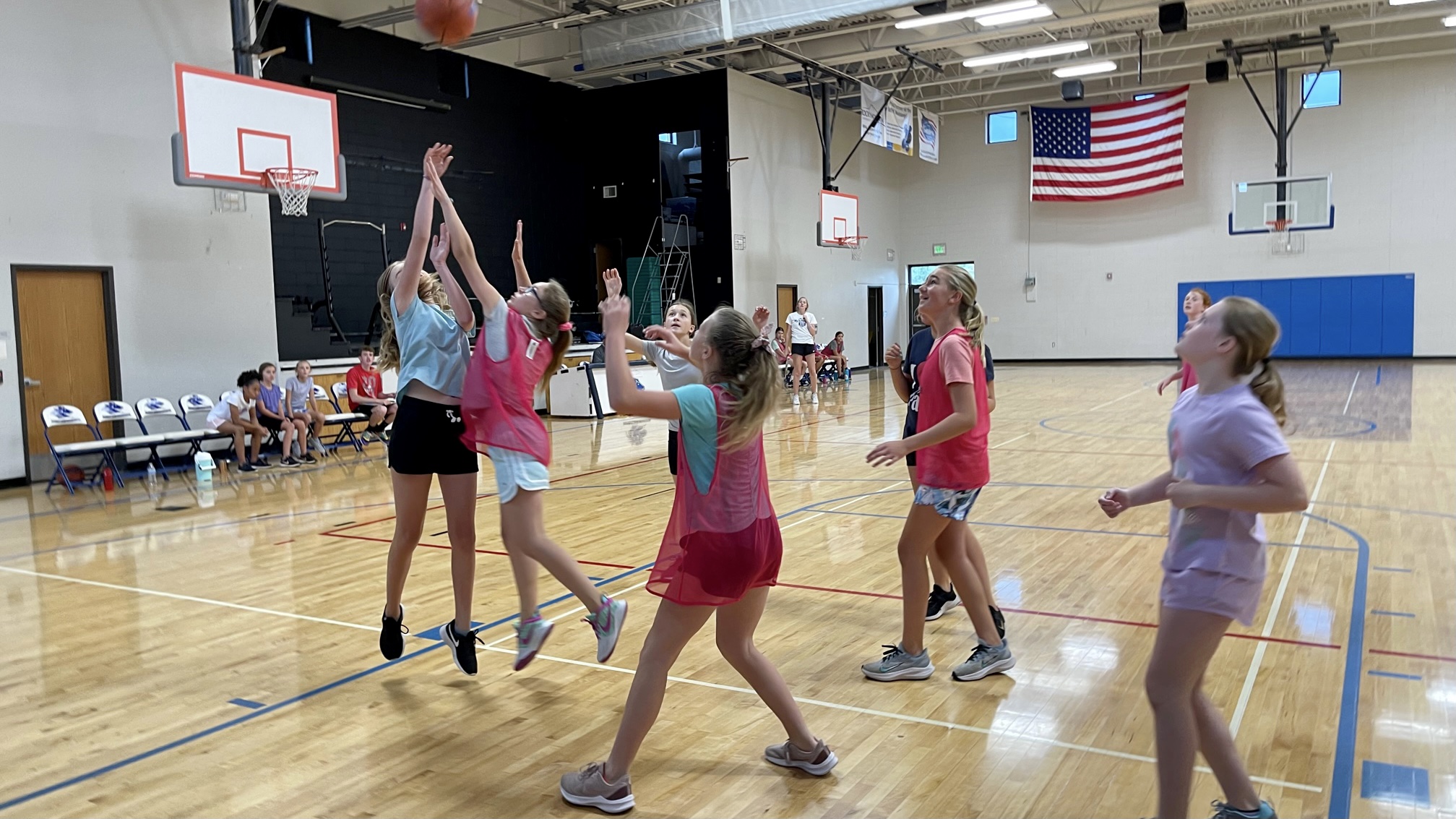
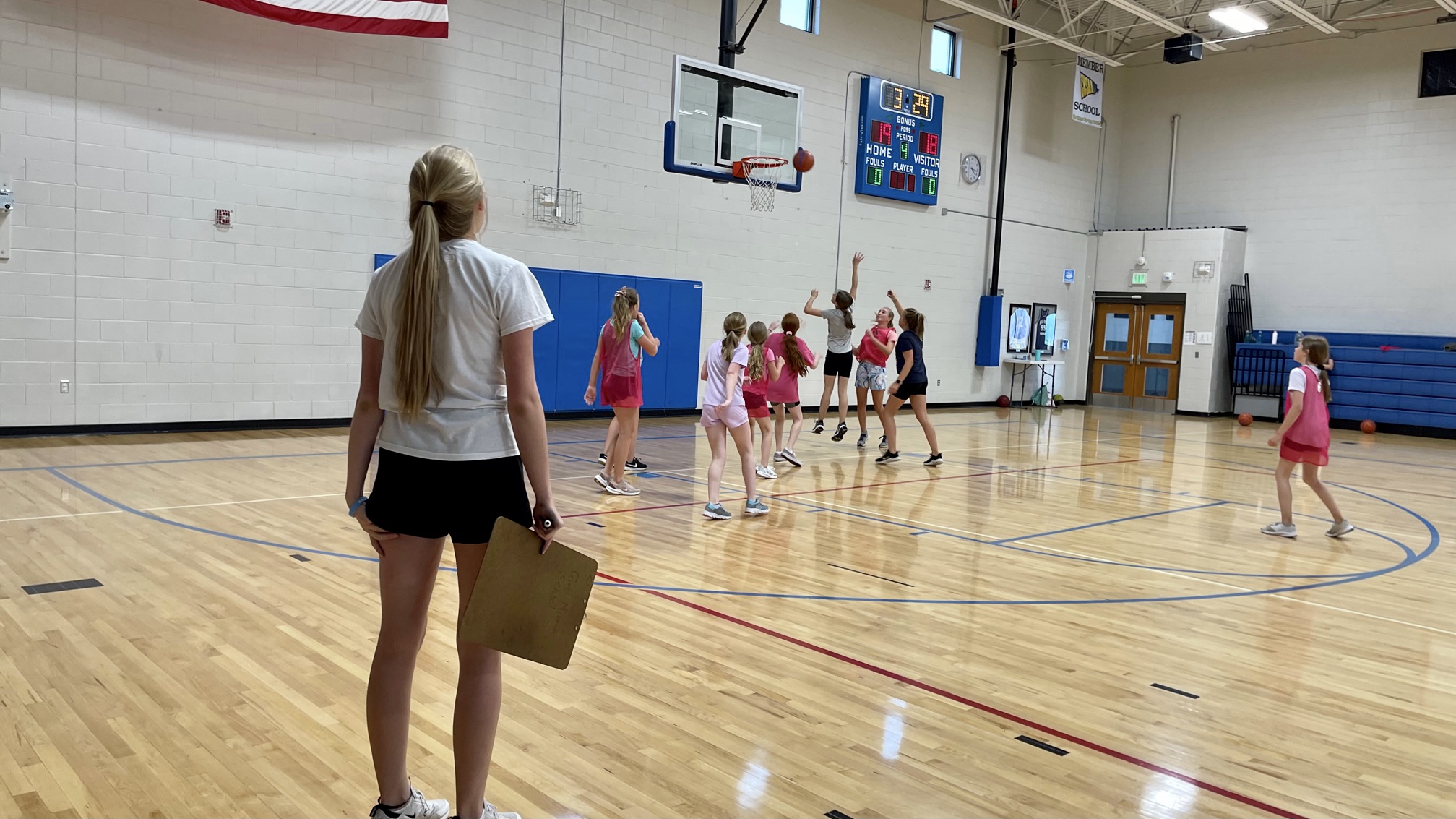
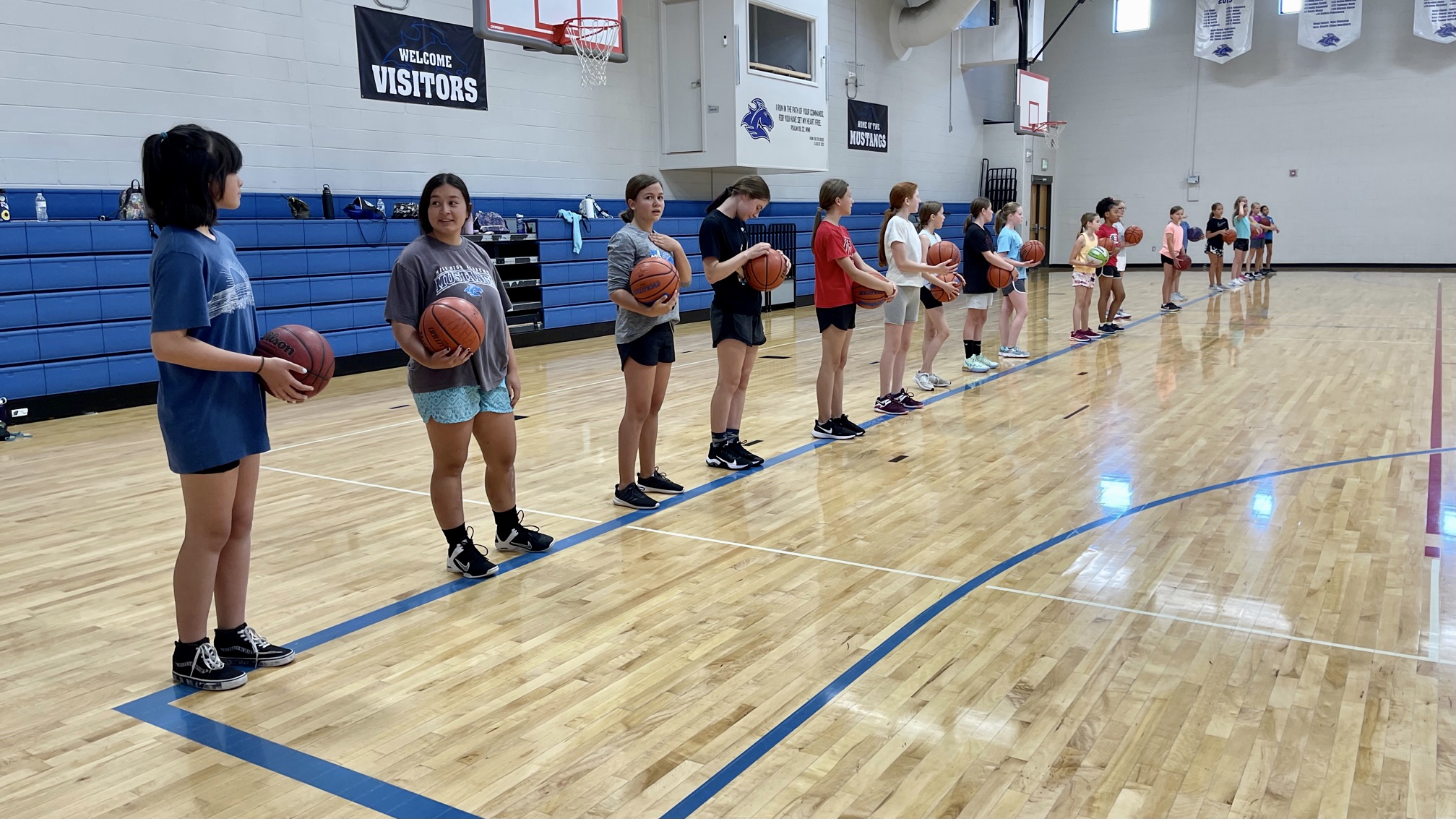
The first event was a week-long basketball clinic for the middle-school girls. They were coached through various skill drills, including general basketball etiquette, dribbling, passing, and learning how to work together as a team. Both current and former Mustang basketball players came together to help the 22 girls improve their skills on the court.

Why hold a basketball clinic? For Weber, the answer was simple. They are trying to give the girls what they missed during the school year–sports.

“The middle schoolers really felt the effects of the pandemic, which included not being able to have a basketball season last year. I wanted to give the girls an opportunity to come together for a few days to have fun, get refreshed on their basketball skills so they’re ready for the upcoming season, and just enjoy some time with their friends,” Walter commented.

The other opportunity for the students to grow together had to be adjusted because of the weather, but the students were still happy to be with their friends. The initial plan was to converge at the Chatfield Reservoir swim beach on Friday, June 25 for paddle boarding, swimming, a scavenger hunt, hot dog supper and vespers. However, since the event was postponed to Sunday because of rainy weather, and the weather was still not cooperating, the gathering transitioned into an open-gym night with volleyball, basketball and pizza for the 60 who had assembled.

“It was fun to see everyone. While I was bummed, we couldn’t be at the lake, Mr. Weber and Mrs. Hernández still made it a fun evening to be with my friends,” Logen, seventh-grader said.

Besides the weekly Monday baseball pick-up games for third through fifth-grades, the next event will be an high school evening at the MHA soccer field on July 12.

–MHA News; photos supplied

24 Jun

OPINION: SUMMER RECONNECT

By Alise Weber … I like to pray as I walk. Two years ago, I was keeping a brisk pace on one of the nature trails by our home and praying to God about a particularly troubling situation my husband and I were dealing with. It had been a long week and there didn’t seem to be a respite from the hardship we were facing. In desperation, I prayed, “God, please have someone call me that will cheer me up.”  I continued my walk, almost forgetting about my prayer.

Suddenly my phone rang and I had one of those perfect moments when I knew that God had answered my prayer. The person calling was a good friend who normally didn’t call on a Saturday afternoon. We spoke and my friend offered just the right encouragement for my troubled heart. Before we hung up, I said, “You know, right before you called, I prayed that someone would call to cheer me up.”  Without missing a beat, my friend replied, “Every day I pray that God will use me to bless someone else.”

My friend’s response may seem simple enough, but how many of us actually take time to pray that God will use us to minister to others, to share Christ’s love, or further the Kingdom of God each day? When I think about the motivation behind my friend’s prayer, I can’t help but think of all the opportunities that exist if we simply open ourselves up to be used by God daily.

Summertime is upon us, which means summer vacations, pool days, backyard barbecues, and road trips. While we are all relishing in a more normal summer, we are also emerging from a pandemic where people have experienced loss by the handfuls and have gotten used to being apart from one another. Perhaps there is no better time to pray the prayer my friend requests daily, “God please use me to bless someone today.” I think people are hungry to reconnect, to be prayed for, and to hear the good news of Jesus Christ. Your church may have members you haven’t seen since the pandemic started. It’s time to let them know they are missed and that their church family wants to see them again.

Jesus often sought out people who were on the fringes–Zacchaeus, the Samaritan woman at the well, Matthew, the tax collector, and the cripple at the pool of Bethesda. It would have been easy to ignore them, as everyone else did, but Jesus knew how important they were to our heavenly Father. Precious.

It says in Matthew 5:13-16 “In the same way, let your light shine before others, so they may see your good works and give glory to your Father who is in heaven.”

I would like to challenge all of us to begin each day praying that simple prayer, “God please use me to bless someone today.”  This may be your best summer yet!

–Alise Weber is pastor of families and children at Littleton Adventist church; photo by UnSplash

24 Jun

ARVADA CHURCH REACTS TO COMMUNITY TRAGEDY WITH PRAYER

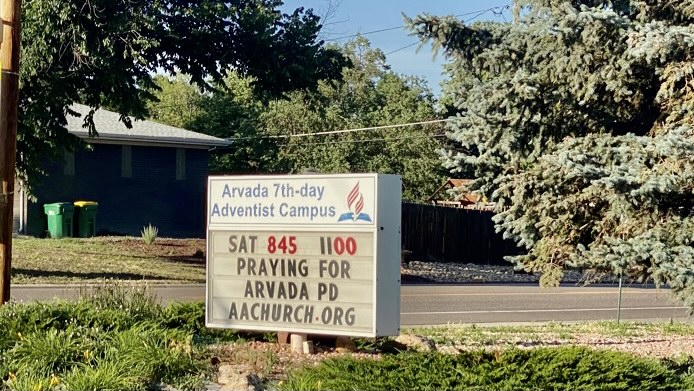
By RMCNews – Arvada, Colorado … On June 22, an Arvada police officer was shot and killed in the line of duty.

The church sign, expressing support and prayer for the officer, the officer’s family, the Arvada police, and the community said simply, “Praying for the Arvada PD.”

Pastor Gordon Anic recounts an interaction with a community member while he was putting up the sign. “Some guy [who] was jogging by [the church], stopped and said, ‘Thank you for putting that up, I work for the Arvada police department as a cop.’”

A church member attending the Arvada congregation described the tragedy as not only affecting the community, but the church also. “Our hearts are joined with the grieving families who lost their loved ones in the shooting at Olde Towne Arvada. Our community has suffered a great blow in the loss of innocent people,” Patricia Armijo, said. According to media reports, the shooting took lives of three people, the officer, a passer-by, and the shooter.

Members of the Arvada church continue to pray for healing in the community after this tragic event.

–RMCNews; photo by Miloš Tomic

24 Jun

NETWORK OF SPACES CREATED TO FOCUS ON NEWDAY MINISTRY FOR FAMILIES

RMCNews with Agape Hammond – Parker, Colorado … Newday Adventist church has a four part mission that includes inviting, connecting, growing, and serving. By strongly focusing on family and our youth we are creating connections that will grow into eternity.

Preschool through 5th grade students at Newday meet on the first Sabbath of every month for a special service called KIDVENTURE. Guided by middle and high school students, the groups, divided by age, go through interactive stations learning about Jesus and His love for them.

In the month of May, Newday saw the return of the NXTGEN teen ministry to morning worship. Every Sabbath at 10, they meet in groups on what is known as “The Hill,” which is a grassy area located on the church campus. The youth participate in discussions that include their spiritual walk and life’s important issues that affect them now.

However, it’s not only Sabbath mornings that keep families of Newday engaged. Every month, Kid’s and NEXTGEN ministries host a family day. Recently, families gathered at Top Golf for two hours of golfing and brunching.

“The church and the family have an opportunity to create a network of spaces for our children to grow in their faith,” commented Anika Engelkemeir, kids’ and students’ pastor.

This focus on families aims to instill a Christian lifestyle as church members connect with the community, advancing the work of discipleship outside of weekly church gatherings.

–RMCNews with Agape Hammond is director of social media and communication at Newday; photos supplied

23 Jun

COMMENTARY: IT’S NOT A COMPETITION

By Doug Inglish … Okay, I’m human. We all have things in common, and competition is certainly a big one. It doesn’t have to be in sports or games, either. It could be school, business, even yardwork (“Did you see the new landscaping across the street? We better put up that pergola we’ve been talking about before everyone starts talking!”) can become a competition.

In fact, it’s almost hard not to get competitive. Back in ancient times when we did door-to-door Ingathering (ask someone who’s been in the church for fifty years; they remember), we always knew at the end of the evening who brought in how much. If we had just emptied our collection cans into a big pile and counted up a single total, not one less dime would have gone to disaster relief work, but I’ll bet none of you can think of a church that did it that way. No, everybody counted up their own collections, and it got recorded by your name, and then we added them all together. So yes, competition is practically built into even noble endeavors.

Competition can bring out our worst characteristics if we don’t keep an eye on ourselves. A win-at-all-costs attitude can lead you to cheat, lose perspective on what matters, or do other things that you later regret.

So, here’s an idea for how to avoid being competitive in situations that should not be a contest: Rejoice when someone else is doing well, no matter how you are doing. If your neighbor’s flower garden is doing well, be happy for them, and fix up your yard for your own reasons rather than trying to keep up with them.

I make a lot of calls to leaders in other conferences, and one topic of frequent comment among us is how tithe is doing. Well, as you are no doubt aware, it’s going well in RMC. Five months in and we have double digit increases. That’s reason to rejoice! When I am on the phone with another conference and tithe comes up, I’m happy to share, because it’s good news.

You know what else is good news? Brace yourselves: When it comes to tithe increases in 2021, comparatively the Rocky Mountain Conference is about in the middle of the pack. And very often I find myself rejoicing over the gains in another conference, as they rejoice with me over our good news.

In fact, if the increase that we have right now was dead last in the division, that would still be cause for rejoicing. It would mean that we wouldn’t have any less because of the gains elsewhere, and that people in other places were also being faithful. I would be happier still if we had double or triple our current increase and still came in behind every other conference.

I love the fact that, at present, a 14% gain is not the best in the North American Division–I’ve seen times when no conference had as much as a 5% increase–because I know the Lord doesn’t have a money problem, but numbers like we see right now indicate that our people don’t have a selfishness problem. And why would it make me happy if other places were struggling? That response would only make sense if tithe increase was a competition among the conferences.

But it isn’t. Thank the Lord for that. And thank Him that we have faithful people, as there are in other places.

–Doug Inglish is RMC vice president for administration and stewardship director.

23 Jun

IS YOUR RELIGION IN NAME ONLY?

By Ed Barnett … Jesus was the ultimate example of Christianity. It is through Jesus that we hear and learn how to live the Christian life. Christianity is not easy; it goes against our grain as selfish, sinful human beings. I have four wonderful and bright grandsons and yet, with each of them, I see their selfish nature come through. We are simply born into sin. It is simply something that every one of us must fight daily. Jesus makes it clear that others are to be the top priority for Christians.

May I take you through several Bible passages that Jesus shared clarifying what a Christian should be like?

Mathew 7:12—The Golden Rule: “Therefore, whatever you want men to do to you, do also to them, for this is the law and the Prophets.” That is not easy to do because of our sinful nature. Just going to church for a couple of hours a week won’t give you the change of heart to really live by that model that Jesus gives us in the Golden Rule. Just having your name on a membership list in the Seventh-day Adventist Church won’t help you to live by that model.

Another passage from Jesus is found in Matthew 22:37-40: “Jesus replied: ‘Love the Lord your God with all your heart and with all your soul and with all your mind. This is the first and greatest commandment. And the second is like it: Love your neighbor as yourself. All the Law and the Prophets hang on these two commandments.’”

I believe that everyone we encounter is our “neighbor” and these verses tell us we need to “love them like ourselves.” Notice there is no qualification for what that person may look like, what nationality they are. There is no mention of whether they are male or female. No mention of the political party they support or their religion. There are simply no qualifications specified. This says to me we must love everyone no matter what walk in life they represent. That is not always easy as you may hate what your neighbor stands for. Yet Jesus says you still need to love them.

There is another verse that many Christians struggle with and I see people struggling with it often in the Seventh-day Adventist Church. Notice what Jesus says in Matthew 7:1-2: “Do not judge, or you too will be judged. For in the same way you judge others, you will be judged, and with the measure you use, it will be measured to you.”

This is a tough verse. Often in our churches, I hear people judging other people. It may be about what they wear. It may be what they brought to potluck: “It had cheese in it.” It may be they are judgmental about the pastor, or the pastor’s wife. It may be about the Conference leadership or another local church. It may be about someone else’s Sabbath observance. The list could go on forever.

In the beatitudes, (Matthew 5:2-12): Jesus speaks to His people:

“Blessed are the poor in Spirit”
“Blessed are those who mourn”
“Blessed are the meek”
“Blessed are those who hunger”
“Blessed are the merciful”
“Blessed are the pure in heart”
“Blessed are the peacemakers”
“Blessed are those who are persecuted”

At the end of the list, Jesus says, “Blessed are you when people insult you, persecute you and falsely say all kinds of evil again you because of me.”

We struggle at times with the list of special people God identifies in the Beatitudes. It is not easy to meet people who “insult and persecute you.”

But God calls us to do all these things if we are truly Christian.

Matthew 7:13,14: “Enter through the narrow gate. For wide is the gate and broad is the road that leads to destruction, and many enter through it. But small is the gate and narrow the road that leads to life, and only a few find it.” It is easier to just join the crowd and go merrily through life doing what you want to do. To me Jesus also insinuates in these verses that His ”way” is hard to follow; it’s a narrow path on the way to heaven.

Matthew 7:21-23: “Not everyone who says to me, ‘Lord, Lord,’ will enter the kingdom of heaven, but only he who does the will of my Father who is in heaven. Many will say to me on that day, ‘Lord, Lord, did we not prophesy in your name, and in your name drive out demons and perform many miracles?’ Then I will tell them plainly, ‘I never knew you. Away from me, you evildoers.’” Jesus makes it clear that there are people who think they are followers of Christ, but are they really? They may even have done good things, but Jesus says: “I never knew you.”

It is easy to be called a Christian and to go to church for a couple of hours a week. It’s a lot harder to truly be a Christian and live life in the unselfish way Jesus asks us to live; to live life for others instead of self. The only way to live the way Jesus calls us to live is by spending time with Him every day. And you cannot do it on your own! It is only through God’s power that you can live the successful Christian life. It is all about Him!

–Ed Barnett is RMC president. Email him at: [email protected]

23 Jun

A MINISTRY OF PRESENCE

By Dick Stenbakken … Knowledge is a wonderful thing. The Bible encourages us to seek God’s knowledge above silver or gold. Knowledge, linked with wisdom, is more valuable than jewels and brings wealth and recognition when rightly used and appreciated (Proverbs 8:10-36).

Knowledge of the Bible, its doctrines and prophecies, is great, but there is something beyond knowledge: the ability to put that knowledge into practical work shoes and gloves to touch the lives of others. Paul’s thirteenth chapter of I Corinthians spells it out well. He says without love, the practical fruit of knowledge, without application of what we know, we are just making noise to no practical end. The results are zero. In fact, our noisy sharing of knowledge might just be irritatingly counterproductive.

The Scriptures challenge us to know. But beyond the cerebral sacrament of knowing, there is the reality of applying what we know to the needs of those around us: the honest, no-strings-attached life that demonstrates belief by unselfish, selfless service.

Jesus lived out what He knew. He touched lepers. He spoke to outcast women. He healed ceremonially unclean women and morally unclean men. He demonstrated His theology by his actions. His was a ministry of presence, an incarnational ministry we are invited to mirror. He ministered to people with a no-strings-attached love. He left the choice of belief up to them. There was no quid quo pro demand or expectation.

I have seen that kind of incarnational ministry, and it is winning and warming (as well as challenging!). Here are some examples:

Joe Martin was selling books when he encountered a man who said he would love to buy the books, but he didn’t even have money for shoes. Sure enough, as Joe looked, the man had no shoes. “What size do you wear?” Joe asked. When the man replied, Joe’s face lit up: “That’s the size I wear too! Here, take my shoes. They will fit you,” he said as he quickly removed his shoes and gave them to the shocked, but appreciative man. Yes, the books were “truth filled,” but Joe’s actions spoke an immediate and more readily understandable truth about God’s love than the printed pages of the books the man couldn’t afford.

Or, consider the woman who was teaching Sabbath School one winter when she saw a family come in dressed in well-worn, but clean clothes without any coats. “Did the children leave their coats in the hallway?” she asked the mother. “Well, no . . . they don’t have any coats,” was the timid response. The teacher smiled and said, “We are going to do something very different for Sabbath School today! Mom, you go to the adult class. We’ll meet you at the church service.” That day, the children’s class met at Target. When they got to the worship service, the children without coats all had new, warm winter coats and boots matched by ear-to-ear smiles. (You can debate the timing if you wish, but Jesus said something about the ox in the ditch on Sabbath. I think this equates.)

During the year I spent in Vietnam, I routinely went on convoys with the troops (remember the ministry of presence . . . incarnational being with people?). The troops started their day at 3 in the morning when their trucks would be loaded. At 7 or 8 they lined up and pulled out to deliver food, water, ammunition, supplies, and fuel to various locations. I was in an open jeep in the middle of the convoy (think “moving target in a shooting gallery”). There were safe (safer hopefully) stopping points where we would pause for lunch before going on to our destination. The drivers were young men with voracious appetites. But I never was on a convoy where I didn’t see many of the soldiers give their lunch, and extra goodies they brought along, to the ragged children who swarmed us like ants when we stopped. Somehow the news media never covered that, but I saw it time and time again.

Consider Greig, a Roman Catholic Army chaplain/priest assigned in the greater Washington, DC, area. His job was to give denominational coverage to multiple Army installations in and around DC. His schedule was brutal. He heard there was a brother priest who had been badly wounded in an Iranian IED blast and was now in Walter Reed Medical Center. He didn’t know the man, but he was a brother, so Greig went to visit him. When he got there, the man’s mother and sisters were in the room. They were haggard by the long vigil they were keeping, and by the serious injuries of their loved one. Greig visited with them, had prayer, then said, “If there is anything I can do for you, here is my home number. Feel free to call.”

When he got home, there was a message on his answering machine. The family was asking him to come sit with their loved one on Saturdays so they could get a break. Would he be willing to do that? Saturday! Saturday was Greig’s only free day. It was, essentially, his Sabbath day of rest.

Greig spent every Saturday for the next three months reading and conversing with a man who was so severely injured that there was no way of knowing if he was even aware someone was in the room with him, let alone comprehending what Greig was reading and saying to him. Greig told me he would read for up to eight hours on those days. He would read until he was so hoarse, he could speak no more.

Consider an adult Sabbath School class who was invited to help a teenager get some clothing that was appropriate for her situation: she barely had the basics. The class took up an impromptu offering, including IOUs for those who didn’t have checks or cash with them: the class raised more than $400 on the spot. Two weeks later, it was proposed that the class start a fund to help people in need and to have funds on hand to meet the needs when they arose. The class voted to do so. That was more than 10 years ago. Since then, there have been no appeals for funds. People just continue to give and meet needs as they emerge. Thus far, gifting has been more than $50,000. Funds have covered food for neighbors in need, payment for heating bills during a winter for an immigrant family, help for mission trips, and more. Recipients don’t need to be members of the church; all they must do is demonstrate a need. No strings. No hooks. Just modeling a willingness to put faith into action and theology into practice.

James, Jesus’ brother, put it well: “Religion that God our Father accepts as pure and faultless is this: to look after orphans and widows in their distress and to keep oneself from being polluted by the world” (James 1:27, NIV).

It has been said that people don’t care how much you know until they know how much you care.

Esoteric knowledge about the Bible, prophecy, and theology has a place, but meeting needs and modeling the Gospel is always appropriate. Compassionate ministry of presence opens hearts and blesses both the giver and the receiver.

We can be so absorbed in attempting to parse prophetic details that we miss needs and opportunities to bless others right around us. Beliefs that wear boots and gloves to lift others’ burdens bridges the gap between profession and practice.

The poet, Edgar Guest, said it well in “Sermons We See”:

I’d rather see a sermon than hear one any day;
I’d rather one should walk with me than merely tell the way.
The eye’s a better pupil and more willing than the ear,
Fine counsel is confusing, but example’s always clear;
And the best of all the preachers are the men who live their creeds,
For to see good put in action is what everybody needs.
I soon can learn to do it if you’ll let me see it done;
I can watch your hands in action, but your tongue too fast may run.
And the lecture you deliver may be very wise and true,
But I’d rather get my lessons by observing what you do;
For I might misunderstand you and the high advice you give,
But there’s no misunderstanding how you act and how
you live.

–Dr. Dick Stenbakken, retired army chaplain (Col.), served as director of Adventist Chaplaincy Services at the General Conference and North American Division. He lives with his wife Ardis in Loveland, Colorado. Email him at: [email protected]

23 Jun

ARMCHAIR ADVENTISTS

By James Moon … As a people awaiting the return of Christ, it is all too easy to be Armchair Adventists who prefer profession over practice, and find ourselves channel surfing between 3ABN, Loma Linda Broadcasting Network, or the Hope Channel. Other Armchair Adventists engage in online debates via forums like Facebook, Twitter, Spectrum, AdVindicate, or Fulcrum 7.

Sabbath afternoon has been one of my favorite times to sit back and surf. What’s the latest controversy or theological debate? How can I satisfy my sense of biblical superiority by seeing what the “right” or “left” side of the church is saying? I might not pray “thank you that I am not like other men, extortioners, unjust, adulterers, or even like this tax collector,” (Luke 18:11), but I have certainly thought while sitting in my armchair, “thank God I’m not like other Adventists. Thank God I’m balanced!”

On a personal level, the armchair is a dangerous place for my spiritual well-being. The armchair is also a significant risk to our missional health as the corporate body of Christ. It is all too easy to tweet, post, or reply from our Lazy Boys instead of engaging seekers or unbelievers in authentic, face-to-face conversations. In exchange for personal ministry moments with the potential to experience the saving grace of Jesus with unbelievers, we tend to choose pontificating about “spiritual matters” that mean nothing in the scope of eternity. So, what is the answer for our armchair apathy?

For me, one “getting out of the armchair” experience involved a moment of reflection on the steps of St. Joseph’s Catholic Church in Capulin, Colorado. It was the late spring of 2015, and while a Catholic Church is probably the last place you would expect an Adventist pastor to learn about moving from profession to practice, sometimes Jesus takes us to unexpected places to teach unexpected lessons. Kind of like His journey with the disciples through Samaria and subsequent conversation with the woman at Jacob’s well (see John 4:1-42). While Christ’s disciples were not expecting to learn anything in this God-forsaken Gentile land, Jesus wanted to give them a taste of food they knew nothing about (John 4:32).

I got a taste of what Jesus was talking about on that spring day in Capulin when I looked up from my journal to see two young men and a young woman making their way to the boarded up high school directory across the street from St. Joseph’s. They were passing a beer bottle between them and talking about old times.

In that moment, the Holy Spirit encouraged me to get up from my armchair, cross the street, and engage the three strangers in conversation. My heart was nervous. “Lord I don’t know what to say. I have nothing in common with them. They’ll probably think, ‘who does this guy think he is? Some holier than thou Christian?’” All the negative scenarios played out in my mind. Fear was holding me hostage.

But Jesus didn’t give up. “Just go over and engage them in conversation. What do you have to lose? I will be with you. I can help you.”

So, leaving my armchair of insecurity, I made my way across the street. This is an excerpt from my prayer journal account of that day in Capulin:

May 25, 2015: I had a missional prayer encounter with Tommy, his friend Alex, and Alex’s girlfriend Kayla. I saw them talking by the Capulin Youth Center. I went over and said hi. Tommy lost his parents five years ago when his dad shot his mom and then shot himself. Tommy said, ‘You live and then you die bro. That’s all there is to it. You live and then you die.’

Tommy’s sense of hopelessness was palpable: “You live and then you die bro.” Nothing more, nothing less. Just life, and then death. Nothing to look forward to. Only the sorrows of a past in which his father killed his mother and then took his own life. Listening to the stories of Tommy and his friends, I felt so powerless. My heart hurt for and with them. There was no quick fix.

Not knowing what to say in response, I asked if I could pray with them. My prayer was specific, simple, and brief. I asked Jesus to comfort Tommy in his grief, give Kayla wisdom about her future, and to be with Alex when he returned to jail. At the end of the prayer Tommy said, “Bro, you know, I don’t have a lot of people pray for me.”

My heart longs for Adventists to be known as the people who pray with people. Oh, that we might get out of our armchairs and get on our knees in intercession for the Tommy’s of this world. While we argue and debate over fine points of doctrine, they are in desperate need of a doctor. It is time to leave our armchairs and lift our arms to heaven on behalf of those longing for purpose, hope, and salvation.

Mission isn’t a debate. It is a decision to listen. Before the world will hear what, we have to say, we must give them the opportunity to say what we need to hear. We need to hear their story by listening to their sorrows, hurts, hopes, and dreams. Because imbedded in the stories of people all around us is a bridge to good news of God’s love. In Tommy’s case that bridge was having someone pray with him about his grief and loss.

Who is the Tommy God is calling you to bless? Let your witnessing begin with listening. Because as you and I choose to get out of our armchairs, open our eyes, and notice the people God puts in front of us, we will find a world longing to be heard. As Jesus said, “Open your eyes and look at the fields! They are ripe for harvest” (John 4:35, NIV).

I’ll be the first to admit, it can be a struggle to leave my armchair and cross the street to engage in a missional moment of listening. Whether it is the fear of rejection, my own insecurities, or just the desire to digitally disengage. But when I have chosen to engage with the Tommys that Jesus puts in my circle of influence, I have felt most alive and most fulfilled missionally.

In my journey of witnessing through listening, the Lord has given me a simple strategy for discipling through listening and prayer. Spelling the word HELP, this strategy involves four steps: heeding, engaging, listening, and prayer. The first step is to heed the person God shows you. Step two is to engage them in conversation through a question or observational statement. Step three is to listen to their story. And step four is to minister in prayer. Based on the conversation, the Holy Spirit will impress you as to whether you should simply pray for the person privately, or whether you should extend an invitation to pray together in the moment.

As I continue seeking to get out of my armchair and engage in the HELP practices, I have found them to be an effective discipleship catalyst. Because as we pray specific, simple, and brief prayers with the people we have listened to, they feel heard and loved. They also gain a confidence to talk to Jesus themselves.

This is what happened with my wife’s friend Susan.* Susan was someone who didn’t go to church on a regular basis. She had experienced trauma at the hand of religious people. But after Ingrid constantly listened to Susan and prayed with her in the context of an organic friendship, Susan offered to pray for Ingrid during a stressful time. Ingrid’s commitment to listen and pray with Susan resulted in Susan learning to listen and pray.

May I challenge you to try heeding the people God shows you, engaging them in conversation, listening to their story, and ministering to them in prayer. Because I believe these simple practices can HELP all of us get out of our armchairs and into the mission of making disciples. Give it a try. If you would like to share your experience, I would love to hear it. Simply, send your story to: [email protected]

–James Moon is pastor for worship at Collegedale Seventh-day Adventist Church in Collegedale, Tennessee. Email him at: [email protected]

23 Jun

MIND THE GAP

By Barry Casey … In the London Underground, there are signs cautioning us to “Mind the Gap,” calling us to attention when getting on and off the Tube. It’s a sign that should be posted in a lot of other places in our lives.

There is the gap between our public aspirations to equality and the stark realities of systemic racism, the deconstruction of voting access for millions of people, and the constant inequity between the top one percent in this country and almost everyone else.

There’s the gap between what corporations claim are their highest values of equality, service, and diversity, and the reality of discrimination, indifferent service, and a whiter shade of pale in corporate boardrooms.

There’s the gap between our personal best intentions and what we actually display to the world. And there’s the gap between what we, the church, claim as the kingdom and what we substitute in its place.

Show us the Father, the disciples challenged Jesus. And he replied, “If you’ve seen me, you’ve seen the Father.” The disciples, like us, saw only that which fit the scope of their vision. The Father was too sovereign, too remote, too terrifying to be anything less than thunder in the mountains or a mighty wind rolling back the waves of the Red Sea.

Jesus brought the Father across that gap between the human and divine, slipping the invisible footprints of the eternal God into his own along the roads of Galilee. He called his Father by an endearing name. But old habits are hard to break: we can be sure not many prayed to God as “Abba,” or “Daddy.” There was an unbridgeable gap there, fixed and immovable in their eyes—and ours.

How often do we think of Jesus as divine? Most of the time. How often do we see him as fully human? Far less. There is a gap. Yet, as human, he suffered all the temptations we do and more. To whom much is given, much is required.

If we really saw Jesus as human, we would not be surprised when his anger flares up, when he weeps over Jerusalem or when he pounces on the hypocrisy of the religious leaders. These are not weaknesses; they are evidence of an impassioned soul completely immersed in this world, yet constantly breathing the air of transcendence.

Within the spectrum of the visible, Jesus’ divinity ripples, fades, reappears and vanishes. “I and the Father are one,” Jesus claimed, infuriating the keepers of the sanctuary and bewildering the disciples. “Divinity flashed through humanity,” said Ellen White, in a metaphor as visceral as it is inadequate.

We keep trying to summarize Jesus in a thirty-second elevator pitch. It can’t be done. We want something we can carry with us, an amulet for the fingers when we are tempted or grieving. We have the images we’ve gathered from the Gospels: Jesus making his way across the waves to the terrified disciples, rubbing his thumbs across a blind man’s eyes, and enveloped in a brilliant cloud as the voice of God reverberates across the dry hills. These are part of our inner art galleries, companions to the work of artists who have stretched his likeness across their canvasses.

The senses need touch, though. Body yearns for body. We would take the Emmaus Road in the late afternoon, our hearts broken, if we thought there was the slightest chance, we could relive that moment with the mysterious stranger who innocently asked what happened in Jerusalem that weekend.

We are not within the same chronological trajectory as Jesus. There is a gap. He burns across the skies at light speed. When we read his story in the Gospel of Mark, the prose itself is breathless. The narrative runs to keep up with him. He emerges from the wilderness, the habitation of demons, and immediately turns his hometown synagogue upside down. Full of the Spirit, he announces the breaking in of the kingdom. “The time is ripe,” he says, “and God’s kingdom has come close. Change your purpose and trust in the good news.”

A man tortured by possession is in the synagogue screaming in pain. Jesus reaches deep and drags the demon out, leaving the man shaken, but grateful, the onlookers stunned by the authority of Jesus’ word. Across the gap between the stiff sanctity of the sacred service and the raw clawing out of the demon from its midst, the word of Jesus sizzles through the air: “Put on a muzzle and come out of him!”

We come up against a mystery: Jesus and his mission are one and the same. To have some inkling of Jesus as a living, breathing person is to take tentative steps across the gap between this world and the kingdom. He shows us the way to God, not through a formula for successful salvation, but by being the person in whom God was most fully seen. At the risk of cliche, the way God acts in the world is through Jesus as the Way.

We get this not through a painstakingly logical progression of thought, but by a leap of trust across the gap. In Jesus we see God as God wants to be seen and known.

Even so, there is still a gap between Jesus and us—a gap that cradles history and human nature. Over the course of a lifetime, we are drawn to Jesus in a multitude of ways. We may see him in art, sense him in music and poetry, revel in the gospel stories, interpret his words for our situation.

There is always the situation and the story. A gap stretches between the two.

The situation is this moment in history, the events, and structures we find ourselves within. Language, myth, and symbol are how our story creates us in this situation. Our situation and Jesus’ situation differ, not in nature but in degree.

The whole of human life consumed and transformed him in ways that we will likely not experience this side of death. We get glimpses of it, we hear the music occasionally, but the heavens will not part for us as they did for him. The gap remains. Therein lies our glory and our salvation. He has done what we cannot do that we might live through his life.

–Barry Casey taught religion, philosophy, and communication for 37 years in Maryland and Washington, D.C. He is now retired and writing in Burtonsville, Maryland. More of his writing can be found on his blog, Dante’s Woods. His first collection of essays, “Wandering, Not Lost,” was recently published by Wipf and Stock. Email him at: [email protected]
1 139 140 141 142 143 255